
Why Plane Accident Cases Require Specialized Lawyers
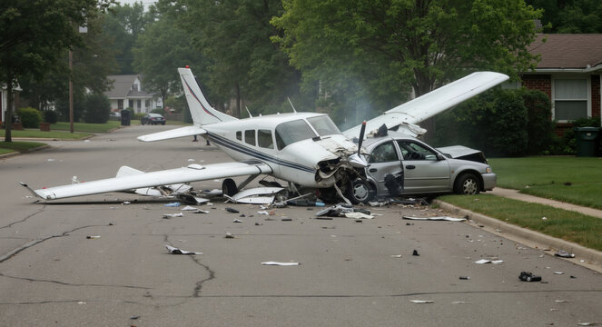
Aviation accident claims are much more complicated than other personal injury claims. Since they are governed by federal law, there is always more than one defendant, in addition to having a very technical nature. Plane accident cases require specialized lawyers because they involve complex federal regulations, technical evidence, and multiple potentially liable parties that demand specific legal knowledge.
Despite the safety record of flying, accidents do happen, which result in catastrophic injuries or even death. According to global statistics related to aviation, despite a substantial drop in the number of accidents, each incident results in disastrous outcomes.
Texas is known for its diverse culture, strong economy, and deep-rooted aviation presence. With a mix of modern cities and traditional values, the state reflects a fast-paced yet community-driven lifestyle. Its major airports and expanding infrastructure make it a key hub for both domestic and international air travel.
When accidents happen, victims and families often rely on a Texas plane accident lawyer to navigate the legal and technical challenges tied to aviation claims.
Plane Accident Cases Are Complicated
While all types of accidents have similarities, plane accidents are complex cases that need extensive research, investigation, and analysis. Unlike in road accidents, where cases are handled by local authorities, plane accidents are investigated by the FAA and NTSB.
Some major considerations when handling aviation accident cases are:
- Federal jurisdiction and regulations
- The involvement of multiple parties
- Technological evidence, e.g., flight data recorders
- International laws, depending on the type of case
An accident involving a plane is subject to federal aviation laws. The FAA has strict safety guidelines in Title 14 of the Code of Federal Regulations (14 C.F.R). These factors alone make the case more complicated; that is why one needs an experienced plane accident lawyer.
More Than One Party Could Be Responsible
Liable parties may include the following:
- Pilots/crew members
- Manufacturers of the airplane
- Maintenance providers
- Airlines/aircraft operators
- Air traffic controllers
For instance, according to the Federal Tort Claims Act (28 U.S.C. § 1346(b)), the United States can be held liable for negligence on behalf of air traffic controllers resulting in an accident. This necessitates hiring an attorney well-versed in multiple-party liability.
Technical Evidence
It is vital to analyze technical data in aviation cases. This includes:
- Information from the flight data recorder (black box)
- Cockpit voice recordings
- Radar information
- Weather conditions information
- Aircraft maintenance records
- Training records of pilots
The NTSB will conduct a thorough investigation using these types of evidence to identify the possible causes. However, without prior knowledge in aviation cases, one may fail to understand the significance of this data or how to present it legally.
Injuries Are Usually Catastrophic
The injuries resulting from plane accidents are usually catastrophic because of the nature of the accident. Death, severe burns, spinal cord injury, and brain injuries are some of the catastrophic consequences of plane accidents.
Wrongful death suits can be brought against defendants under Texas Civil Practice and Remedies Code § 71.002. The significance of the case calls for legal expertise.
Steps to Take Following a Plane Accident
If you or someone you know has been in an accident, you need to take the following steps:
- Get immediate medical attention
- Keep documentation/evidence
- Do not communicate with insurers without legal advice
- Get official reports on the accident
- Hire a lawyer specializing in aviation cases
Because of the technical complexities involved in aviation cases, it becomes imperative that one acts fast.
Why It Pays to Hire Aviation Lawyers
Aviation lawyers are familiar with federal aviation regulations, NTSB investigation processes, complicated liability issues, and aviation technical data.
They can use this knowledge to construct better cases and seek appropriate compensation.
Key Takeaways
- More than one party can be made accountable, sometimes even governments.
- FAA guidelines and federal legislation significantly influence the determination of negligence.
- Technical information such as black boxes becomes important when establishing a case.
- Almost all aircraft accidents occur due to a combination of several causes.
- Fatal injuries frequently result from air crashes.
- Legal experts must be consulted when handling aviation cases.