
When Moving Day Takes an Unexpected Turn
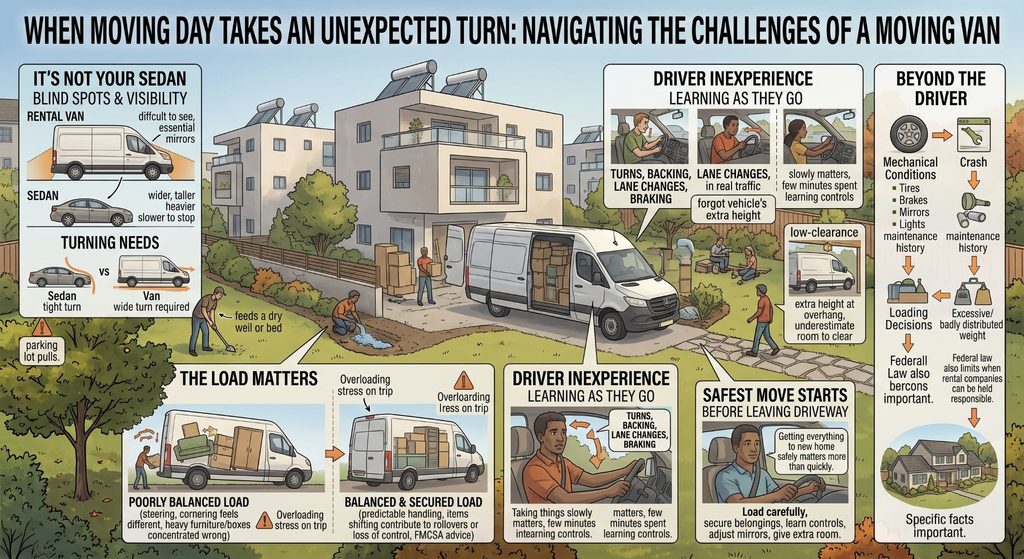
Moving day has enough problems before anyone gets behind the wheel. There are boxes everywhere, furniture that somehow doesn’t fit, and a schedule that’s already running late. Then someone who normally drives a sedan climbs into a much larger vehicle packed with nearly everything they own.
That first drive can be an adjustment. The vehicle may be wider, taller, heavier, and slower to stop than what the driver uses every day. Turns require more room, mirrors suddenly matter a lot more, and backing into a driveway can feel completely different with limited visibility behind the vehicle.
Add a heavy load, an unfamiliar neighborhood, and a tired driver, and a moving van can create challenges that aren’t obvious while it’s sitting quietly in the driveway waiting to be loaded.
It Doesn’t Drive Like the Car You Left Behind
A larger moving vehicle can take some getting used to. The driver sits differently, the vehicle occupies more of the lane, and turns may require considerably more space. Even something as ordinary as pulling into a parking lot can feel different when there’s a much longer vehicle following behind.
Blind spots are another adjustment. Larger vehicles can have areas around them that are difficult to see, particularly when backing or changing lanes. Mirrors become essential, but drivers accustomed to smaller cars may not immediately appreciate how much space can disappear from view.
Stopping takes planning too. A larger, heavily loaded vehicle won’t necessarily respond like the family sedan when the brake pedal is pressed. Leaving extra distance and slowing earlier can make ordinary traffic situations much easier to handle. The bigger vehicle needs a different driving mindset.
The Boxes Can Change How the Van Behaves
Loading isn’t only about squeezing everything inside and getting the door closed. Where that weight ends up can affect how the vehicle handles. A poorly balanced load may make steering and cornering feel different, especially when heavy furniture and boxes are concentrated in the wrong places.
Unsecured belongings create another problem. A hard turn or sudden stop can send heavy items shifting inside the cargo area. When enough weight moves unexpectedly, it can affect the vehicle’s balance and make maintaining control more difficult. FMCSA specifically advises drivers to keep loads balanced and secure because shifting cargo can contribute to rollovers or loss of control.
Overloading can add even more stress to the trip. The vehicle has limits for a reason. Packing carefully and securing belongings isn’t simply about preventing a broken lamp. It can help the vehicle remain predictable on the road.
The Driver May Be Learning as They Go
Most people who rent a truck for moving day don’t spend their weekends practicing with large vehicles. They may pick up the keys, adjust the mirrors in the parking lot, and immediately start learning how the truck handles while driving it through real traffic.
That lack of familiarity can show up during turns, backing, lane changes, and braking. A driver may forget about the vehicle’s extra height when approaching an overhang or underestimate how much room is needed to clear a parked car. Rental trucks can also have blind spots and handling characteristics that feel unfamiliar to ordinary motorists.
None of that means an inexperienced driver will automatically crash. It does mean taking things slowly matters. A few minutes spent learning the controls, adjusting mirrors, and getting comfortable with the vehicle can make the first miles less intimidating.
Sometimes the Story Goes Beyond the Driver
After a moving vehicle crashes, the person behind the wheel is an obvious place to start asking questions. Was the driver speeding, distracted, or struggling to control an unfamiliar vehicle? Those details can matter, but they may not always explain everything that contributed to the collision.
The condition of the vehicle can matter too. Tires, brakes, mirrors, lights, and other equipment all play a role in keeping a larger vehicle manageable. If a mechanical problem contributed to the crash, maintenance history may become relevant. Federal law also limits when rental companies can be held responsible simply because they own the rented vehicle, making the specific facts important.
Loading decisions can raise separate questions. Who packed the vehicle, whether the cargo was secured, and whether excessive or badly distributed weight affected handling may all deserve a closer look.
Conclusion
Moving day tends to revolve around what’s inside the truck. People worry about whether the couch will fit, whether dishes will break, and whether everything will arrive before dark. But the vehicle carrying those belongings deserves just as much attention once it pulls onto the road.
A larger vehicle brings different blind spots, turning needs, and stopping behavior. Add unfamiliar handling and a heavy load, and ordinary maneuvers can require more planning than the driver expects. Federal safety guidance highlights blind spots, longer stopping distances, wide turns, and load security as important considerations around larger vehicles.
The safest move starts before leaving the driveway. Load carefully, secure belongings, learn the vehicle’s controls, adjust the mirrors, and give yourself extra room. Getting everything to the new home safely matters more than getting there quickly.