
How Different Kinds of Cleveland Injury Claims Get Proven
Injury claims in Cleveland cover a surprisingly wide range of underlying situations, and three categories in particular commercial trucking accidents, dog bite injuries, and motorcycle crashes each depend on proving fundamentally different things, even though all three ultimately fall under Ohio’s broader negligence framework. Understanding what actually needs to be established in each category tends to matter more than any general sense of what an injury claim typically requires.
Why Trucking Cases Pull In Federal Rules No Car Crash Involves
Commercial truck accidents pull in a layer of federal regulation that never applies to an ordinary passenger vehicle collision, since commercial drivers operate under specific hours-of-service rules limiting how long they can drive without rest, and trucking companies face their own maintenance and inspection obligations that a typical driver never has to think about. Violations of either set of requirements can shift the entire narrative of a crash away from simple driver error toward a broader failure involving the company itself.
Electronic logging devices required in most commercial trucks record a driver’s hours automatically, creating a data trail that can reveal whether a driver was operating beyond legal limits at the time of a crash. Getting that data preserved quickly matters enormously, since a trucking company facing potential liability has little incentive to voluntarily hand over information that might work against its own interests, which is why an 18 wheeler accident attorney Cleveland residents contact after one of these crashes typically sends a formal preservation request almost immediately, targeting that logging data along with maintenance records before routine company policy allows any of it to be overwritten.
Multiple parties typically share potential liability in a commercial truck crash in a way that rarely applies to a standard collision, since the driver, the trucking company that employs them, and sometimes a separate company owning the trailer can each bear some portion of responsibility depending on what actually caused the crash. Sorting out which party actually contributed takes considerably longer than identifying fault in an ordinary passenger vehicle case.
Insurance coverage limits also differ substantially between these two categories, since commercial trucking companies typically carry far higher liability coverage than an individual driver’s personal auto policy, reflecting the greater potential severity of harm a large commercial vehicle can cause. That difference often shapes how aggressively a trucking company’s insurer defends a claim compared to how a standard auto insurer might approach an equivalent passenger vehicle case.
Trucking companies also typically deploy their own rapid response teams following a serious crash, sometimes arriving at the scene within hours to begin their own investigation well before an injured party has retained anyone to represent their side. Understanding the investigation scope involved in these cases underscores why an injured party’s own evidence-gathering shouldn’t wait until the situation feels less overwhelming, since the company’s side is rarely waiting either.
Why Dog Bites Skip the Fault Question Entirely
Dog bite cases operate under an entirely different legal framework, since Ohio imposes strict liability on a dog’s owner for most bite injuries, meaning an injured person generally doesn’t need to prove the owner was negligent in the traditional sense only that the dog bit someone without provocation while that person was lawfully present. This shifts the central question away from fault and toward more specific factual issues: whether the injured person was trespassing, whether they provoked the animal, and whether the bite actually caused the claimed injuries.
Establishing these specific factual elements often becomes the real work in a dog bite case, and a cleveland dog bite lawyer handling one of these claims typically focuses on documenting exactly where the bite occurred, what the injured person was doing at the time, and whether any prior incidents involving the same animal exist that might be relevant to how the case gets evaluated. Homeowners insurance often covers these claims, though insurers sometimes argue aggressively over the provocation and trespassing exceptions specifically because those exceptions represent their primary defense against an otherwise fairly clear-cut strict liability standard.
Medical documentation in dog bite cases also carries specific weight beyond the immediate wound itself, since bite injuries carry a meaningful infection risk and can sometimes require follow-up treatment, scar revision surgery, or psychological support for a child who developed a lasting fear of dogs after a serious attack. Capturing the full scope of these consequences, rather than treating the initial emergency room visit as the entire medical picture, tends to matter considerably when the case eventually gets valued.
Ohio also imposes specific reporting requirements on dog bites in many jurisdictions, and animal control records documenting a bite incident can become important evidence establishing exactly when and how the injury occurred, independent of either party’s later recollection. Requesting these records early, before they age out of a jurisdiction’s standard retention schedule, tends to preserve evidence that becomes harder to obtain the longer a case sits without formal action.
Why Motorcycle Cases Start From an Uphill Position
Motorcycle crashes introduce a different kind of complication entirely, one rooted less in a specific legal standard and more in a persistent bias problem that shows up early and tends to stick around without something concrete to correct it. Insurance adjusters and even jurors sometimes assume a rider was speeding or riding recklessly before any actual evidence gets reviewed, and that assumption can shade an officer’s initial report before physical evidence has a fair chance to tell a different story.
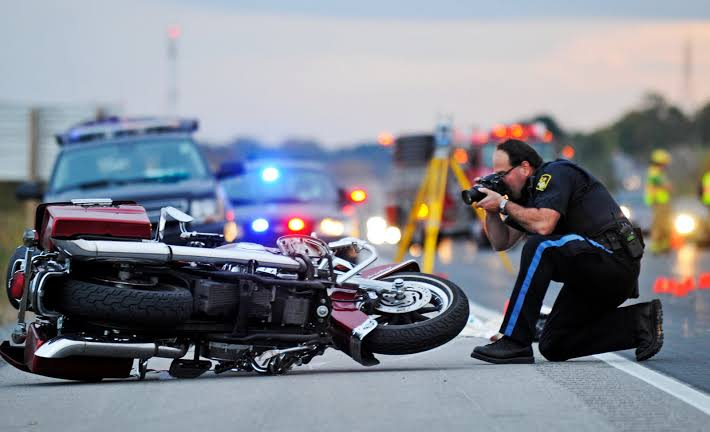
Physical evidence matters more in these cases than in almost any other crash category, and reconstruction work skid marks, the angle of impact damage, exactly where debris landed becomes central to what a motorcycle accident attorney cleveland riders trust typically spends real time on, precisely because a motorcycle sliding across pavement leaves far less behind than a totaled sedan’s crumple pattern would. That thinner evidence trail is part of why an initial biased narrative tends to persist longer than it should without a deliberate effort to correct it.
Comparative negligence gets argued more aggressively against motorcycle riders than against drivers in a standard collision, with adjusters frequently pointing to lane position or following distance as contributing factors even when neither had anything to do with why the other driver actually failed to yield. Countering that kind of argument usually requires laying out the specific sequence of events in more detail than an initial settlement offer bothered to include.
Injury documentation in motorcycle cases also looks different from what a typical car accident produces, since riders without the protection of a vehicle frame tend to show road rash, fractures consistent with being thrown rather than restrained, and helmet damage that can indicate real impact force even in a rider who seems fine immediately afterward. Emergency room records don’t always connect these specific patterns back to the mechanics of the crash without a treating physician being asked directly to address that connection in more detail.
Recognizing Which Standard Actually Governs a Specific Case
None of these three categories of trucking accidents, dog bites, and motorcycle crashes get proven the same way, even though all fall under Ohio’s broader injury law. A trucking case depends on preserving federally regulated data and untangling multiple potentially liable parties. A dog bite case depends on Ohio’s strict liability standard and its specific exceptions for provocation and trespassing. A motorcycle case depends on physical reconstruction to correct an assumption of fault that often forms before the facts are known. Recognizing which framework actually governs a specific situation tends to matter more than any general assumption about how an injury claim in Cleveland is supposed to proceed.