
Achieving Financial Predictability with BIM and Modern Estimation Methods
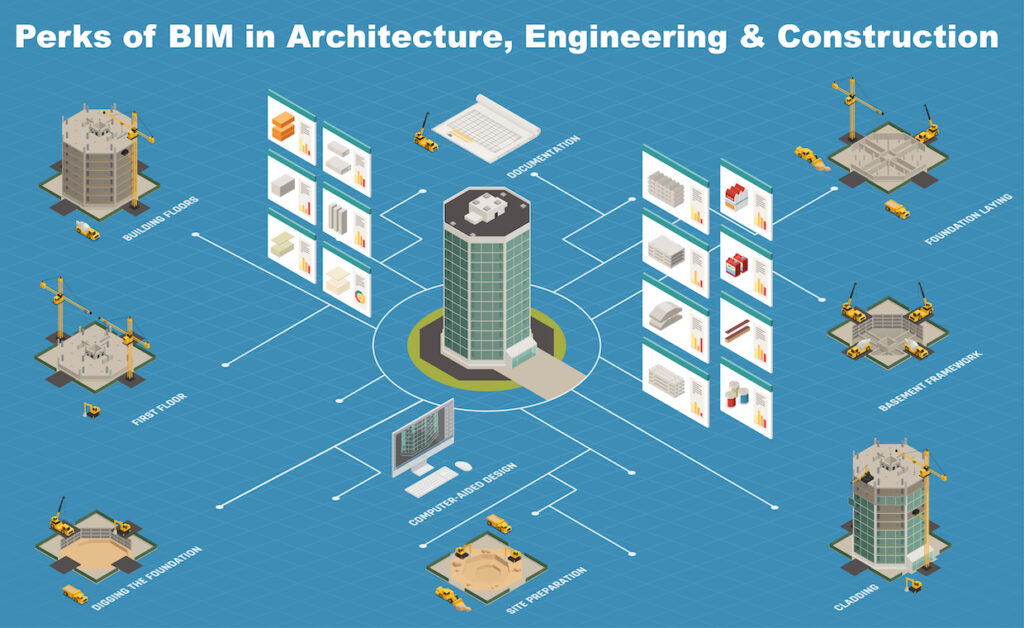
Construction budgets are more than numbers on a page. They are planning tools, decision guides, and risk gauges. A project can have top-tier teams, excellent scheduling, and skilled trades, yet still miss its financial targets. That usually happens because cost decisions are made in isolation or based on incomplete data.
If you connect what’s being built with what it will cost — early and throughout the project — surprises shrink. That’s where modern workflows that link BIM Modeling Services with thoughtful Construction Estimating Services — and structured Xactimate Estimating Services where needed — begin to pay off.
This isn’t about fancy software. It’s about better inputs, consistent handoffs, and clear numbers people can trust.
Turning Design Into Quantities You Can Price
Estimating used to mean staring at 2D drawings, pulling a scale out, and hoping nothing was misunderstood. Today, models replace that guesswork.
With BIM Modeling Services, a digital model becomes the source of measurable quantities. A wall isn’t just “shown here.” It has thickness, material, and a countable surface area.
Good modeling practices mean:
- consistent naming of families and elements
- minimal but essential attributes (material, finish, thickness)
- agreed units (each, linear foot, square foot, cubic meter)
- export formats that preserve measurements (CSV, IFC)
When quantities are extracted from the model instead of inferred, the estimator starts with numbers that reflect reality.
Where Construction Estimating Services Add Depth
Numbers alone aren’t costs. They’re inputs that must be interpreted. That’s where Construction Estimating Services do their work. Estimators don’t just multiply unit costs by counts. They layer in local market knowledge, crew productivity, sequencing, and risk consideration.
Skilled estimating can:
- Identify missing scope items
- Flag ambiguous design areas before pricing
- Layer labor productivity factors based on reality, not idealism
- Adjust assumptions for site access, staging, or phasing
In these areas, experience matters as much as data. A model gives you measurable quantities; an estimator turns them into defensible financial plans.
Adding Structure With Xactimate Estimating Services
Some projects demand an extra layer of structure and presentation. Insurance work, public bids, and formal client reviews often require a standardized, line-item presentation of cost. That’s where Xactimate Estimating Services comes in.
Xactimate provides:
- Consistent line items with clear definitions
- Localized price libraries with regional variations
- Auditable reports that reviewers trust
- A familiar structure for cost breakdowns
When quantities from a model feed into Xactimate, the output becomes not just an estimate, but a communication tool that stakeholders can interpret confidently.
Better Continuity Throughout the Project Life Cycle
Predictability doesn’t end when estimates are delivered. It needs to remain through procurement, construction, and close-out.
Teams that link BIM with estimating enjoy:
- Material orders based on verified quantities
- Clearer expectations for subcontractors
- Scheduling based on real labor and delivery timelines
- Progress tracking tied to actual model elements
When the same data flow supports both estimating and execution, the budget becomes the backbone of the project — not an afterthought.
A Repeatable Workflow for Financial Predictability
Simple, repeatable processes beat ad-hoc ones every time. A workflow that teams use consistently yields better results than one that changes from job to job.
A successful cost planning loop looks like this:
- Kickoff: Agree on model naming standards, metadata requirements, and export formats.
- Modeling: BIM produces milestone exports with measurable quantities.
- Mapping: Connect model outputs to cost line codes in a shared, versioned spreadsheet.
- Estimating: Construction Estimating Services import the mapped data and apply local rates and judgment.
- Structure: Use Xactimate for projects that require standardized, auditable reports.
- Validate: Reconcile totals with procurement and field input before purchase orders are issued.
Repeat this at key project milestones, not just once.
Practical Wins That Teams Notice Quickly
You don’t need six months to see improvements. Many teams notice benefits within weeks.
Typical early wins include:
- Faster bid turnaround because takeoffs are automated
- Fewer change orders due to early scope alignment
- Cleaner procurement with fewer rush orders
- Clearer audit trails when Xactimate outputs are part of the package
These outcomes aren’t theoretical. They show up in purchase orders, progress meetings, and weekly budget reviews.
Common Friction Points and How to Solve Them
Technology helps, but governance matters just as much.
Teams often struggle with:
- Inconsistent naming that breaks quantity extraction
- Missing or unclear metadata
- Export files that drop measurements
- Outdated mapping between model and cost codes
Fixes that work:
- Publish a concise modeling guide and enforce it at kickoff
- Use templates to lock in naming standards
- Version-control your mapping spreadsheet in a shared environment
- Run sample exports early to catch surprises before key decisions
These steps protect estimator time for analysis instead of cleanup.
People Still Matter — Tools Amplify Judgment
Software doesn’t eliminate judgment. It enhances it. BIM provides structured data. Estimates bring experience. Xactimate Estimating Services gives standardized reporting where needed. None of these replace human insight — they make it more powerful.
A good estimator, working with reliable model data, can:
- Test multiple scenarios quickly
- Evaluate change-order impacts before they happen
- Advise on value engineering based on measurable cost shifts
- Support negotiations with a documented basis
People still make the tough calls. The data just makes those calls smarter.
Starting Small and Growing Confidence
If your organization is new to integrated estimating, start small. Choose a project that represents your typical work. Run a complete cycle: model, map, estimate, validate.
Pilot checklist:
- Agree on naming and metadata before modeling begins
- Prepare mapping before first export
- Test imports into both estimating tools and Xactimate
- Reconcile totals with field input
Small pilots reduce risk and create reusable templates for future jobs.
Final Thought: Predictability Is a Process, Not a Product
Financial predictability doesn’t arrive with a tool purchase. It arrives with a process that works consistently. By connecting BIM Modeling Services, Construction Estimating Services, and Xactimate Estimating Services, teams move from rough guesses to grounded budgets.
Consistency — not complexity — delivers the confidence that owners, contractors, and teams need. That’s how budgets stop being fragile and start being dependable.
Frequently Asked Questions
1. How early should estimators be involved in the BIM process?
Ideally, as soon as the model begins to take shape. Early involvement helps shape the model in ways that make estimating more accurate and less burdensome later.
2. Can Xactimate be used alongside traditional estimating tools?
Yes. Xactimate is often used to standardize outputs for review or auditing, while traditional tools may handle internal cost models or scenario testing.
3. Are BIM-driven estimates more accurate than traditional takeoffs?
In practice, yes. When models are built with consistent naming and measured attributes, quantity extraction is less error-prone than manual takeoffs.