
How Crime Scene Reconstruction Guides Legal Decision-Making
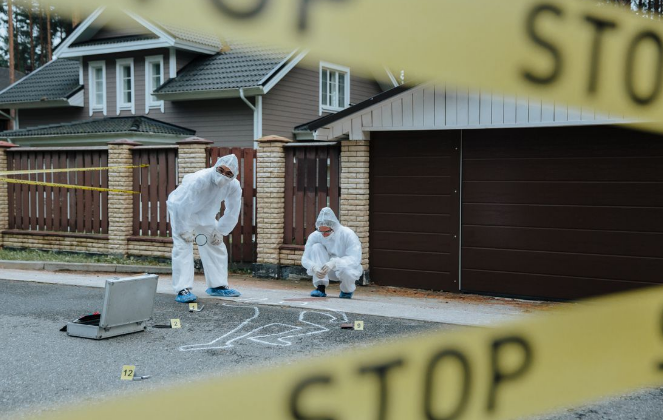
Almost every major legal case starts with the same problem: nobody has a complete recording of what happened. Investigators arrive after the fact. Attorneys inherit fragments of information. Witnesses may remember events differently. Physical evidence sits scattered across a scene without explaining itself. The challenge isn’t simply collecting evidence. The challenge is figuring out how all those pieces connect. Crime scene reconstruction exists because legal decisions become much stronger when they are built around evidence-supported sequences instead of assumptions.
This has become even more important in today’s world. Modern investigations can involve surveillance footage, smartphone data, vehicle information systems, digital communications, forensic evidence, and witness testimony, all at the same time. Having access to more information doesn’t automatically create clarity. In many cases, it creates more questions. Crime scene reconstruction helps organize those details into a framework that investigators, attorneys, judges, and juries can understand.
Scientific Analysis and Criminal Justice
Crime scene reconstruction requires a unique type of expertise because professionals must constantly balance science with real-world investigation. A reconstruction specialist isn’t simply examining evidence. They’re evaluating how different pieces of evidence interact with one another. A footprint might connect to movement. A bloodstain may reveal positioning. A digital timestamp could influence an entire timeline. The work requires patience, technical knowledge, and the ability to see relationships that aren’t immediately obvious.
The people performing this work often spend years refining those skills because the field continues evolving. New technologies, investigative tools, and forensic methods appear regularly, creating a need for continuous learning. Many professionals working in investigations, law enforcement, corrections, and forensic analysis choose to pursue a Master of Science in Criminal Justice online because it allows them to continue gaining field experience while expanding their analytical and investigative knowledge. The online programs at Lamar University cater to the needs of working professionals by offering flexibility. Instead of stepping away from active work, they can immediately apply new concepts to real cases, which helps minimize the gap between academic learning and practical decision-making.
Distinguishing Accidents from Intentional Acts
One of the most significant questions in many investigations is whether an event occurred by accident or resulted from deliberate actions. That distinction influences everything from investigative priorities to criminal charges. At first glance, some scenes appear straightforward. A fall, a collision, or an injury may seem easy to explain until physical evidence begins revealing additional details.
Crime scene reconstruction helps move beyond initial impressions. Investigators examine impact points, object placement, injuries, environmental conditions, and movement patterns to understand what actually occurred. A scene that initially appears accidental may contain evidence suggesting intentional behavior. In other situations, evidence may support an accidental explanation despite assumptions pointing elsewhere.
Bloodstain Pattern Analysis
Bloodstain pattern analysis often plays a major role in reconstruction because blood behaves according to predictable physical principles. The size, shape, location, and distribution of bloodstains can reveal valuable information about movement, force, positioning, and timing. While it rarely provides all the answers on its own, it frequently contributes important context to a broader investigation.
Imagine a situation where multiple individuals provide conflicting accounts of an incident. Investigators may struggle to determine which version is most accurate. Bloodstain analysis helps by comparing physical evidence against those narratives. Patterns can sometimes indicate whether a person was standing, moving, falling, or located somewhere different from what is described. This allows investigators to test claims against measurable evidence rather than relying solely on statements that may be incomplete or inaccurate.
Digital Evidence Expansion
Today, a significant portion of reconstruction work involves digital evidence generated during everyday life. Smartphones record location history. Vehicles collect operational data. Security cameras document movement. Smart devices continuously generate information that may become relevant during an investigation.
This shift has expanded the capabilities of reconstruction specialists considerably. A timeline that once depended primarily on witness accounts can now be supported by multiple digital sources. Phone records may establish location. Security footage can confirm movement. Vehicle data may reveal speed or direction. Reconstruction professionals combine these digital elements with traditional forensic evidence to create a clearer understanding of events.
Why Movement Within a Scene Changes Everything
A crime scene is a record of movement. Understanding who moved where, when they moved, and how they interacted with the environment often becomes one of the most important parts of reconstruction. Even small movement patterns can completely change how investigators view a case.
For example, the location of personal belongings, the path someone took through a room, or the position of evidence can reveal information that witness statements never mention. Movement analysis helps investigators identify inconsistencies, establish timelines, and uncover details that might otherwise remain hidden. In many investigations, understanding movement becomes the key that connects isolated pieces of evidence into a coherent explanation. Once that happens, legal teams can make decisions based on a much clearer picture of what likely occurred.
Alternative Explanations
Crime scene reconstruction is not only used to confirm a single perspective; it also allows defense teams and investigators to explore alternative possibilities. Experts can model scenarios that differ from initial assumptions, testing whether the physical evidence supports multiple interpretations.
Exploring alternative explanations also strengthens the legal process by highlighting uncertainties or gaps in the evidence. It allows attorneys to ask informed questions, prepare stronger arguments, and present balanced assessments to judges and juries.
Event Sequence Development
Establishing the correct sequence of events is a cornerstone of crime scene reconstruction. Investigators use physical evidence, witness accounts, and digital data to arrange events chronologically, which clarifies how incidents unfolded and what could have triggered each outcome. A clear sequence often reveals critical details that may influence legal strategy, such as determining responsibility or timing.
Developing a timeline also aids in courtroom communication. Lawyers and judges can better understand the sequence, and juries are able to follow the evidence logically. Accurate sequencing minimizes misunderstandings and provides a framework for assessing intent, opportunity, and causation, which directly impacts legal decisions.
3D Technology and Digital Mapping
The use of 3D modeling and digital mapping has transformed crime scene reconstruction. Sophisticated software allows experts to create highly accurate virtual representations of scenes, enabling investigators and legal teams to visualize complex interactions. This technology can display movement patterns, line-of-sight analyses, and spatial relationships that are difficult to capture with photographs alone.
Digital reconstruction aids not only in investigations but also in courtroom presentations. Jurors can see a scene in three dimensions, helping them understand evidence more intuitively. These tools make legal arguments clearer, support expert testimony, and enhance confidence in conclusions drawn from physical and digital evidence.
Crime scene reconstruction has become an essential tool in modern legal decision-making. It connects scientific analysis with practical investigation, supports courts in evaluating intent and opportunity, and allows attorneys to examine multiple scenarios objectively. The result is a more precise, evidence-based approach to understanding incidents, giving legal professionals the clarity they need to make informed decisions.