
How Responsible Gun Owners Think About Home Preparedness
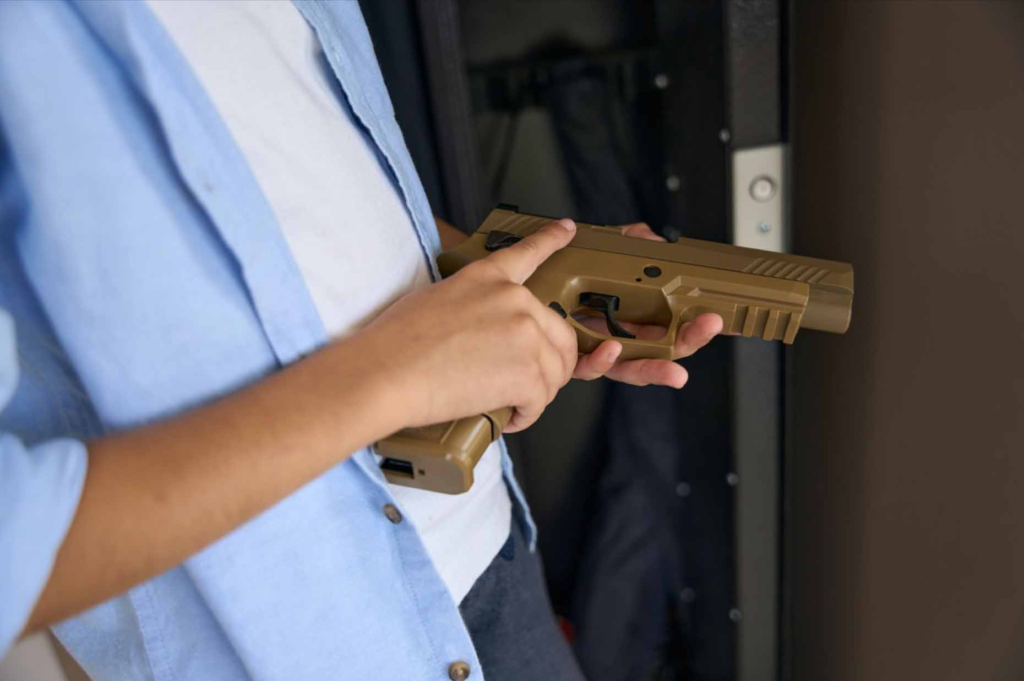
Home preparedness is rarely dramatic in real life.
It is usually a flashlight that actually works. A spare phone charger in the junk drawer. A smoke alarm with a fresh battery. A first-aid kit that has more than three ancient bandages and a tube of ointment from another presidential administration.
The same is true for firearm ownership.
Responsible gun owners tend to understand something that gets lost in louder conversations: owning a firearm is not the same as being prepared. Preparedness is a system. It includes training, storage, judgment, maintenance, legal awareness, and yes, the equipment itself.
But the equipment is never the whole story.
Paranoia does not need to ride shotgun. Responsibility can sit quietly in the house, doing the unglamorous work.
Preparedness Starts With the Household
Every home has its own risk profile.
An apartment in a dense city has different concerns than a rural property. A household with small children needs different safeguards than a single adult living alone. A family caring for an older relative may need medical backup plans. A home in wildfire country needs a different emergency checklist than one in a hurricane zone.
That is why preparedness should begin with ordinary questions.
What happens if the power goes out for two days? Where are the flashlights? Who has the emergency contacts? Where are important documents stored? Can everyone exit the home quickly? Does the household have enough water, food, medicine, and basic supplies?
FEMA recommends keeping several days’ worth of supplies, including water, food, medication, flashlights, batteries, first-aid supplies, and communication plans for household emergencies. The advice is simple because most emergencies create simple problems first: darkness, confusion, thirst, dead phones, and nobody remembering where the batteries went.
Firearm preparedness belongs inside that same practical mindset. It should reduce risk, not add new ones.
Safe Storage Is the First Standard
Before any discussion of models, calibers, optics, holsters, or ammunition, safe storage comes first.
A defensive firearm must be accessible to authorized adults and inaccessible to everyone else. That can be a difficult balance, but it is not optional. Children, guests, roommates, maintenance workers, and visitors should never have casual access to a firearm.
Secure storage can include a quick-access safe, lockbox, full-size gun safe, chamber lock, or other locking device suited to the household. Ammunition storage should also be considered, especially in homes with children or anyone at risk of self-harm.
The Centers for Disease Control and Prevention has identified secure firearm storage as a factor that may help reduce firearm injuries and deaths, particularly where children and adolescents are present. That point should not be controversial. A firearm left unsecured is not preparedness. It is a liability with a serial number.
Storage is not glamorous. Good.
The most important safety habits rarely are.
Training Beats Gear Every Time
Buying a firearm is easy compared with becoming competent with it.
Responsible ownership requires regular practice. That includes safe handling, loading and unloading, malfunction clearing, accuracy, recoil control, target identification, and knowing what is beyond the target. For defensive contexts, it also includes decision-making under stress, communication, movement, and understanding the legal consequences of using force.
Range time matters, but range time alone is not always enough. A square lane with good lighting and a stationary paper target does not recreate the confusion of a real emergency. Quality instruction can help owners build safe habits before bad habits harden.
Dry practice, when done safely with all ammunition removed from the room, can also help reinforce handling skills. The key word is safely. Complacency is where accidents often begin.
A firearm is not a talisman. It is a tool that demands skill.
Ammunition Is a Technical Choice, Not a Vibe
Ammunition selection tends to invite strong opinions.
Some of those opinions are useful. Some are folklore with better packaging.
For responsible owners, the practical standard is straightforward: ammunition should function reliably in the specific firearm, shoot to a predictable point of aim, and match the intended use. Practice ammunition and defensive ammunition do not need to be identical, but the owner should understand how each performs.
This is where brands such as Liberty Ammunition come into the conversation. The useful question is not whether a product sounds impressive. It is whether the chosen load runs consistently in the owner’s firearm, produces controllable recoil, and meets the owner’s performance standards after testing.
No slogan replaces reliability.
If a firearm will be kept for home defense, the ammunition should be tested with the actual magazines or cylinders that may be used. Semi-automatic pistols can be sensitive to bullet shape, cartridge length, magazine condition, and recoil impulse. Shotguns and rifles have their own patterning, zeroing, and penetration considerations.
The box is only the beginning. The range tells the truth.
Know the Law Before You Need It
Firearm laws vary widely by state and locality.
That includes rules on storage, transportation, concealed carry, defensive use, magazine capacity, ammunition types, waiting periods, permits, and where firearms may or may not be possessed. Travelers face even more complexity because crossing a state line can change the legal picture quickly.
Homeowners should understand the laws where they live and avoid relying on internet summaries from strangers with usernames like “TacticalDad1978.” Local statutes, official state resources, and qualified legal guidance are safer sources.
This matters because responsible ownership is not just about what a person can do mechanically. It is also about what they may do legally.
The difference can be enormous.
Maintenance Is Part of Safety
A neglected firearm is not a preparedness tool.
It is an unknown variable.
Firearms used for home defense and self defense rounds should be inspected, cleaned, lubricated, and function-checked according to the manufacturer’s guidance. Magazines should be checked for damage, weak springs, worn feed lips, or debris. Batteries in optics and lights should be replaced on a schedule, not after discovering they are dead.
Ammunition should be stored properly and inspected if it has been exposed to moisture, solvents, repeated chambering, or rough handling. Defensive rounds carried or loaded for long periods may need rotation depending on conditions and use.
This is not obsessive. It is ordinary maintenance.
The same person who checks smoke alarms and replaces furnace filters can understand why life-safety equipment should not be ignored until the moment it is needed.
Home Defense Planning Should Include Everyone
A household plan should not depend on one person improvising perfectly at 2 a.m.
Families should discuss what to do during emergencies in age-appropriate terms. That may include where children should go, what room is safest, who calls 911, how to identify family members in low light, and what commands or phrases mean.
The plan should be simple. Stress makes complicated instructions fall apart.
For many households, layered safety makes sense: exterior lighting, trimmed landscaping, reinforced doors, working locks, alarms, cameras, a dog, good relationships with neighbors, and clear emergency procedures. Firearms may be one layer for some lawful owners, but they should not be the only layer.
The best defensive plan is often the one that prevents a confrontation from happening at all.
Preparedness Should Make a Home Calmer
There is a difference between being ready and being consumed by what might happen.
Healthy preparedness lowers anxiety because the basics are handled. The flashlight works. The documents are copied. The first-aid kit is stocked. The doors lock. The family knows the plan. The firearm, if present, is secured, maintained, and handled by trained adults.
That is not paranoia.
That is housekeeping with higher stakes.
The loudest parts of gun culture often get the most attention, but the serious work of responsible ownership is mostly quiet. Safe storage. Regular training. Legal awareness. Careful ammunition selection. Maintenance. Humility.
No drama. No mythology.
Just adults doing the boring things before the boring things matter.