
Pleasure Architecture in the Aegean: How Greek Resort Design Creates Environments That Make You Stay Longer Than Planned
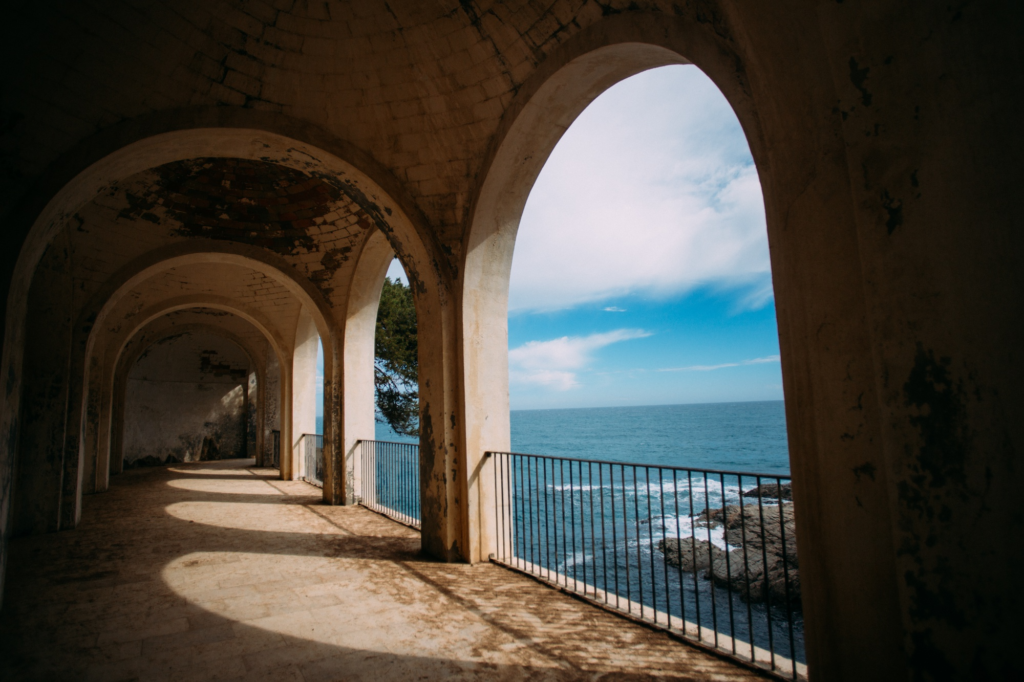
There is a specific moment that regular visitors to Greek island resorts describe almost identically. You sit down somewhere – a terrace, a pool edge, a shaded corner of a courtyard – intending to stay for an hour. Two hours pass, then three. The light has changed. You have ordered something you did not plan to order. You are not bored, and you have no particular desire to leave. This is not an accident.
Greek resort design has developed, across hundreds of properties, a sophisticated understanding of how physical environments shape time perception and dwell behavior. The principles share more with immersive entertainment architecture than most guests realize. The same logic that keeps someone engaged on a platform like spinfin casino past the point they planned to stop operates in gentler form across every well-designed Aegean terrace.
The Geometry of Staying
Thresholds and Transitions
The best Greek resort architecture rarely takes you directly from one space to another. There are almost always intermediate zones – a half-covered walkway, a small fountain court, a shaded arch between the main building and the pool. These transitional spaces serve a practical function in a hot climate, but their more important role is psychological. Each threshold you cross registers as a small act of commitment. By the time you have moved through three or four such transitions to reach your destination, you are invested in being there.
This is the same principle that shapes casino floor layouts, where the path from entrance to exit is never direct. The guest who has walked through a jasmine-covered pergola and down a flight of stone steps has already made more micro-decisions than they realize – and each one anchors them more firmly to the place.
The Manipulation of Sightlines
Sightlines in Greek resort design are never accidental. The best properties engineer views in sequence: something beautiful is always visible from where you are, and something slightly more beautiful is always partially visible just ahead. This creates a constant low-level pull toward the next space without ever making the guest feel pushed. A terrace that reveals the sea only when you sit down has been designed that way. The view is the reward for being exactly where the architect wanted you.
What Keeps People Seated
Beyond spatial sequencing, Greek resort environments deploy sensory tools with remarkable consistency:
- Sound design – running water is almost universal, providing acoustic cover that reduces perceived background noise and creates enclosure without walls
- Shade calibration – the best properties offer multiple microenvironments within a few metres, letting guests self-select their ideal sun-to-shade ratio
- Seating ergonomics – chairs in high-dwell areas are designed to settle into rather than perch on; the physical posture of comfort discourages premature departure
- Scent layering – jasmine, thyme, bougainvillea, salt air – resort plantings are rarely arbitrary, and certain combinations have measurable calming effects
None of these elements announces itself. The guest experiences the result as “atmosphere” – a sense that the place feels right without being able to say exactly why.
The Role of Imprecision
One of the more counterintuitive choices in successful Aegean resorts is a studied imprecision in timekeeping. Menus rarely specify preparation times. Staff are trained not to anticipate the check. The physical environment offers no clock faces, no cues about the passage of hours. This is not negligence. Time anxiety is the primary enemy of dwell. The moment a guest starts calculating what else they should be doing, the spell breaks.
| Design Element | Conventional Approach | Greek Resort Variant | Effect on Dwell |
| Seating orientation | Facing activity or entertainment | Facing landscape or water | Passive engagement, no endpoint |
| Lighting | Fixed levels throughout day | Slow warm shift through afternoon | Masks time passage |
| Service rhythm | Prompt and efficient | Unhurried, attuned to guest pace | Removes urgency signals |
| Spatial boundaries | Clear room definitions | Blurred indoor-outdoor edges | Reduces decision points |
Designing for Return, Not Just Duration
The Familiarity Effect
The deeper goal of Greek resort design is not just extended dwell on a single visit but the emotional conditions for return. This is achieved through what might be called personalisation at scale. The server who remembers your preferred table. The afternoon light in a specific corner of the garden you have already claimed as yours. Small rituals that accumulate over even a short stay and transform an anonymous space into something that feels, improbably, like it belongs to you.
The Value of Imperfection
There is something deliberate about the slight imperfections in the best Aegean properties – the uneven stone steps, the asymmetric courtyard, the bougainvillea grown slightly beyond its frame. These signal that the property is a living thing rather than a managed product. That shifts the guest’s relationship to the space from consumption to discovery. Environments you have explored feel more like yours than environments you have been guided through. The guest who stays three hours longer than planned rarely feels managed. They feel lucky – lucky to have found a place where time works differently. That feeling is the product. The architecture is what delivers it.