
Slips, Falls, and Big Rigs: Two Injury Risks Every Floridian Should Understand
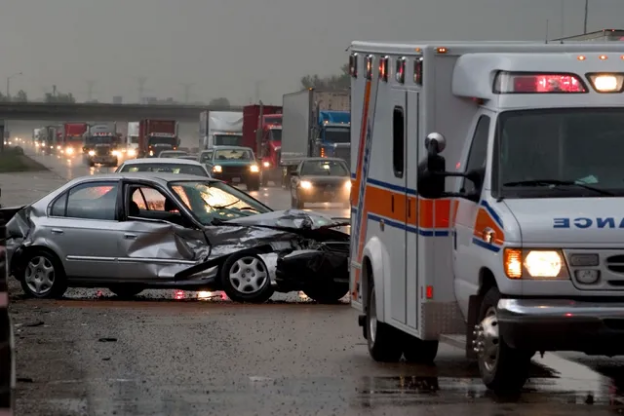
Some injuries come from dramatic, headline-grabbing events. Others happen quietly, on a wet grocery-store floor or in the blind spot of a tractor-trailer on Interstate 10. Both can be devastating, and both raise legal questions that catch people off guard. Slip-and-fall incidents and commercial truck crashes sit at opposite ends of the spectrum in terms of force, but they share a common thread: proving who was responsible is often harder than the victim expects, and the parties on the other side are usually well-prepared to fight back.
This article is a general guide rather than legal advice, but it should help residents of Northwest Florida understand how these two very different injury risks actually work.
Premises liability: the law behind slips and falls
When someone is hurt on another person’s property, the claim usually falls under premises liability the legal principle that property owners and businesses have a duty to keep their spaces reasonably safe. A spilled liquid left unattended, a broken stair, poor lighting, or a hidden hazard can all form the basis of a claim if the owner knew or should have known about the danger and failed to address it.
The phrase “knew or should have known” is where these cases live or die. It is rarely enough to show that you fell; you generally must show that the hazard existed long enough that a reasonable owner would have discovered and fixed it, or that the owner created the danger in the first place. Surveillance footage, maintenance logs, incident reports, and witness accounts become critical evidence, and much of it can disappear or be overwritten within days. For a broad understanding of how Florida injury claims are evaluated, a fort walton beach personal injury attorney can explain how duty, breach, and causation come together the same framework that underlies nearly every premises case.
Why slip-and-fall claims are tougher than they look
People often assume a fall on a business’s property is an easy claim. In practice, these are among the most aggressively defended cases in personal injury law. Insurers and businesses know that juries can be skeptical of fall claims, and they lean into that skepticism hard.
Two defenses come up constantly. The first is the open-and-obvious argument: that the hazard was so visible the injured person should have avoided it. The second is comparative negligence, Florida’s rule that reduces recovery by the injured person’s share of fault and bars it entirely if that share exceeds 50 percent. A defense team will work to pin as much blame on the victim as possible, pointing to footwear, distraction, or a failure to watch where they were walking.
Acting quickly matters enormously here. Reporting the fall to the property manager and getting a written incident report, photographing the hazard before it is cleaned up, and seeking prompt medical care all strengthen a claim that might otherwise dissolve. Many injured people consult a pensacola slip and fall accident attorney specifically because the evidence in these cases is so perishable and the defenses so well-rehearsed. The earlier the evidence is locked down, the harder it is for a business to rewrite what happened.
Truck accidents: more force, more complexity, more defendants
At the other extreme are crashes involving commercial trucks. A fully loaded tractor-trailer can weigh twenty to thirty times as much as a passenger car, and the physics of that mismatch are brutal. Truck crashes produce a disproportionate share of catastrophic and fatal injuries, and the legal cases that follow are correspondingly complex.
The complexity comes from the number of parties involved. A truck crash claim may reach beyond the driver to the trucking company, the company that owned the trailer, a maintenance contractor, a cargo loader, or even a parts manufacturer. Federal regulations govern how long drivers can be on the road, how trucks must be maintained, and how cargo must be secured, and violations of those rules can be powerful evidence of negligence. There is also a wealth of electronic data hours-of-service logs, engine control module recordings, and dispatch records that simply does not exist in an ordinary car crash.
That data is also at risk of being lost. Trucking companies and their insurers often dispatch investigators to a serious crash scene within hours, working to build their defense before the injured party has even left the hospital. A pensacola truck accident lawyer can move just as quickly to send preservation notices, secure the truck’s electronic records, and identify every party that may share responsibility steps that are difficult to take alone and nearly impossible to take late. Identifying multiple responsible parties is not just a technicality, either: when injuries are catastrophic, a single driver’s insurance may fall far short of the actual losses, and reaching the trucking company or other corporate defendants can be the only realistic path to full compensation.
What these two risks have in common
A slip on a tile floor and a collision with an eighteen-wheeler could hardly feel more different, yet the underlying lessons are strikingly similar.
In both situations, evidence is the currency of the claim, and that evidence is fragile footage gets overwritten, logs get cycled out, and scenes get cleaned or repaired. In both, the party on the other side is sophisticated and motivated to minimize what it pays, whether that is a national retailer or a trucking company’s insurer. And in both, Florida’s comparative negligence rule and strict filing deadlines mean that early missteps and delay can quietly erode an otherwise strong case. The injured person who understands this acts fast: documents the scene, gets medical care, and avoids giving the other side material to use.
Practical steps after either kind of injury
The protective steps overlap almost entirely. Seek medical attention promptly, even when the adrenaline makes you feel fine. Report the incident and get it in writing an incident report from the business or a police report from the crash. Photograph everything you can, from the hazard or vehicle damage to your own injuries. Gather contact information for witnesses. Keep your bills, records, and a short daily log of how the injury affects your life. And before you accept any settlement or give a recorded statement, make sure you understand what your claim is genuinely worth over the long term, not just what the first offer reflects. One detail people overlook in both scenarios is the value of acting before evidence is altered: a store can mop a floor or fix a step within minutes, and a damaged truck can be repaired or scrapped within days, so the window to preserve proof is short and unforgiving.
The bottom line
Slip-and-fall incidents and truck crashes represent two ends of the injury spectrum one quiet and easy to underestimate, the other violent and impossible to ignore. What unites them is that both are harder to prove than they first appear and both pit injured people against well-resourced opponents. By recognizing how premises liability and trucking claims actually work, moving quickly to protect evidence, and respecting Florida’s deadlines and fault rules, residents of Northwest Florida give themselves a real chance at a fair recovery no matter which kind of accident upended their life.