
The Invisible Infrastructure of Legal Work: How Remote Paralegals and AI Keep Case Files Moving
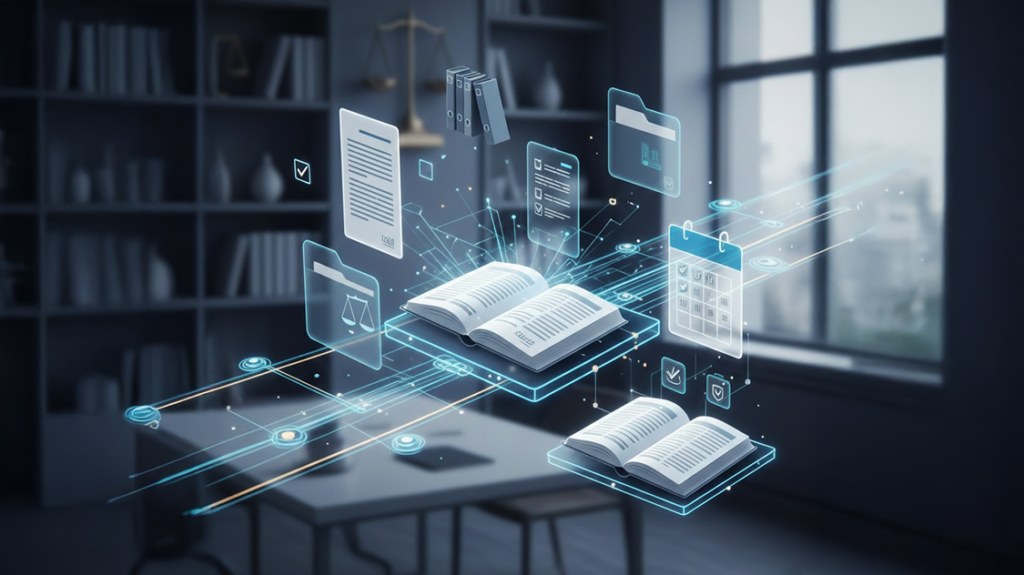
Legal arguments rise or fall on the stability of the record beneath them. Remote paralegals and AI now form the infrastructure that keeps that record intact.
Contemporary legal work isn’t languid because attorneys and paralegals lack skills and talent. It’s languid because case files have become unwieldy, messy, and unpredictable for antiquated admin solutions. Remote paralegals and AI: this silent engine of continuity for case files and case documentation. They don’t just centralize case file administration and manage timelines, they impose naming conventions, manage document versions, correct inconsistencies, and format case information so AI algorithms can properly interpret them. When organizations upgrade from disorganized support services and establish a slick hybrid, they don’t merely become more efficient. They establish their entire business to be faster, with fewer errors, faster filings, and more accurate outcomes. The bottleneck isn’t the argument itself—it’s the admin engine chugging along to ultimately determine case speed in contemporary cases.
Television likes to convince itself that the legal process begins in the courtroom. It is a process you see played out on Suits, where a deposition just morphs into an eleventh-hour pleading, with no process in between. What isn’t shown is the time spent disassembling a timeline from fragmented emails, searching through a production design for loose documents, and cramming a file so the lawyer can enter an unflappable courtroom.
“Real litigation exposes the gulf between those two realms.” Indeed, the nature of the issue in the early Oracle v. Google case involved a discovery dispute about technical documents and email communications numbering in the millions of pages. “The question involved in the case relates to the realm of intellectual property, of course, but the obstacle in the first instance was less complex: Who could index the documents so the attorneys could even commence arguing?” A decade later, this has magnified in every way the case might have imagined. The worldwide e-discovery market, which corresponds to tracking data in litigation, is projected to grow from approximately 16.9 billion in 2024 to over 25 billion in 2029.
“Now, even the most routine dispute between two companies can involve more documents than were exchanged in the most significant federal cases just a few generations before.” However, the group tackling all this volume is pretty much the same. The legal market is very large and mature. For example, the demand for legal services in the USA reportedly is expected to reach 370 billion dollars by the end of 2025, with only just a few percent annual gains. Paralegal employment, meanwhile, in the USA is expected to increase by about 4 percent per decade.
This is the disconnect that defines current practice: cases are accumulating more and more cyberspace mass, yet the same organizational processing power is at work that handled simpler and more localized work when cases were smaller, slower, and far less splintered.
The number of practicing attorneys in the United States is creeping upward, whereas the supply of paralegals is limping along. It is in this gap that the virtual paralegal has emerged. It has done so not as a substitute because it is cheaper, nor as some harebrained technological solution, but because it is a necessary way to maintain the level of throughput without shouldering the administrative burden within the firm.
The Administrative Gravity of Modern Legal Practice
“Every corner of the law has its regulatory drag,” and “this friction has been quietly escalating over the past decade.” “Lawsuits are now producing increasingly vast piles of electronic files.” “Personal Injury claims rest on medical records that come in piecemeal.” “Immigration petitions are based on flawlessly arrayed evidence.” “Family and employment claims are overwhelmed by unpredictable filings,” and “corporate transactions are conducted in diligence rooms that refresh every day.” “The details vary,” but the general trend continues: “legal reasoning trails the paper beneath it.”
The most obvious example is the case itself. Modern cases typically produce document sets that are far more massive than what eDiscovery solutions were designed to handle and process internally. Look, for example, at the Waymo v. Uber case, the trade secrets dispute that demanded forensic analysis of thousands of internal documents, communications, images of the company’s servers, and engineering data.
Such a trend is also seen in antitrust lawsuits. The Blue Cross Blue Shield multidistrict litigation took several years with the never-ending production of documents, use of vendor-assisted review processes, and coordination across multiple facilities. It has been described by the courts as the discovery being rather cumbersome.
Machines can accelerate the process, but these tools don’t diminish the requirements for human processing, indexing, and quality checking for cases. Personal injury practices experience the force of gravity uniquely. According to CDC, there are over 24 million visits annually to emergency departments for unintentional injuries.
There is no possible scenario that doesn’t leave a tangled mess: ER reports, imaging studies, operative reports, therapy updates, bills, professional statements, and insurance communications. These are never in order, more like a pile of papers that never organizes in line with the timing. Being forceful demands strong timing, and timing is only possible when the person building it is competent enough to understand the process.
Immigration attorneys have to deal with a different type of docket: regulatory paperwork. “In 2023,” USCIS “approved more than 10 million applications,” the most ever.” Large dockets mean that cases are reviewed stringently and lack tolerance for an agency’s paperwork error. One misstep in an itinerary list, an identification card, a translation request, and an affidavit will bring a case to a grinding halt for months. It’s not hard to understand the law; the challenge is creating an application file viable enough to withstand an agency review without falling apart from within.”
Family and employment cases raise the level of volatility. Such cases have to be procedurally perfect, with evidence relating to income, bank statements, updates from the medical field, records regarding properties, school documents, and minute correspondences. Cases outside employment also register the same volatility. There is always evidence developed out of performance, human resource records, payroll, disciplinary action, and Email messages not necessarily intended to be subject to judicial review.
Transactional activity introduces a steady, almost imperceptible tension. Diligence rooms begin with an influx of contracts, compliance documentation, incorporation papers, government filings, and financial information, all of which change over the course of a transaction.”
“In contrast, the presence of missing, miscoordinated, or merely disorganized documentation slows things down. Missing information needs to be.
In these respects, the legal issues are seldom where the hold-up occurs. Attorneys know how to advocate, negotiate, scrutinize, and interpret. The issue presented is that volumes are piling up beyond what has been created in capability to deal with them. Given that evidence comes in shreds or in a non-compatible fashion or in amounts that no staff can sufficiently deal with in a timely manner, attorneys are left performing administrative work simply because someone has to.
The remote paralegals filled the gap not because a firm desired to offer a more thinly staffed or expensive option, but because the original process had already outlived its usefulness. While the attorney makes the call, develops the strategy, and provides interpretation of the facts, the framework that supports that judgment, the timelines, the decks of evidence, and the integrity of the packets and document spine are now handling that burden through personnel who can handle peaks of volume in a way and at a scale that fixed-cost teams can’t. This is the takeaway—the aim isn’t to dazzle, and administrative gravity doesn’t often get above the headlines, makes the difference between fast, reliable, and quality work, and that’s why remote paralegals are fast-becoming not supplementary to how firms function, but integral.
Where do Remote Paralegals Fit into the Legal Process?
The legal industry as a whole means more to businesses and organizations today than their systems were originally equipped to manage before. Most of these firms operated under processes that were installed in a time when information was tangible, and administrative work could be relegated to whoever had a spare minute. For any legal firm which decides to Hire Paralegal Specialist, it means that their internal capacity is maximized, and going offshore to expand is the only option.
The answer is simple. The truth is, law is where judgment is applied, but law work isn’t. The beginning of a lawsuit is full of activities that call for accuracy, not judgment. Somebody has to screen the papers, track the timetables, piece together the drafts, check the citations, call for the missing documents, generate the templates, generate the disclosures, and arrange the papers to allow lawyers to think, not search. It is unglamorous, but it drives the pace of the case.
Remote paralegals fill this gap. Their purpose is the glue that holds the legal skeleton of the corporation together. It is reinforced in the American Bar Association’s Model Rule 5.3: Attorneys must control the work being completed by these paralegals. Their work is not prohibited provided the attorney makes the legal judgment. Model Rule 1.6 deals with confidentiality. It applies not just to paralegals’ involvement with the attorney’s clients’ matters. It applies to everyone involved in the work regardless of geographical location. Therefore, the governed directives do not suppress the work of remote paralegals. They suppress the work that attorney judgment cannot control.
The functional fit manifests in relation to what happens in the background work. The lawyer retains all matters requiring legal expertise—strategic thoughts, reasoning statements, client notifications, negotiations, and writing substantive statements. The off-site paralegal manages all ancillary work that enables them all. In a case that has gone to court, it resembles creating disclosure pages and managing all other documents going back and forth. In personal injuries, it entails synchronizing all medical record changes. In immigration cases, re-bundling evidence collections back into good packets amounts to all this work. In family cases and those involving employment law, it entails managing all fresh facts in a situation that can change in a moment.
“A field where deadlines are tight, courts are hard-nosed, and clients demand solutions NOW,” Atkinson has observed, “the difference between an easy case and a bad one often depends on who is doing the unseen work.” Paralegals are doing this unseen work. They are not the face of the operation but the spine that keeps things from falling apart. The remote paralegal has taken up this role.
The Hybrid Workflow: When AI and Human Paralegals Share the Case File
There is a delusion about the legal community that AI will inherently disrupt the industry. But let’s be real: those who have lived in a real case file know the problem isn’t the lack of technology; the problem is the condition of the file itself. AI does not eliminate work—it merely reassigns where the work will be. Only the firms whose files are organized and clean will benefit from AI. AI works well on a problem set that is sufficiently coherent that it might be read without having the meaning inferred. That’s not a condition that exists on its own. It is created by a paralegal. Technology scales the work. Humans scale the work. AI is no better than the file that it is given. The quality of the file is the quality of the paralegal.
Take the case of Waymo vs. Uber, which is known as much for the sheer number of messages as for the alleged claims. While tools such as Relativity and Everlaw aided in reviewing this data, no AI solution could identify which of the Slack conversations were relevant or if the technical diagram was considered privileged information. The process proceeded quickly because individuals paved the way for software to succeed.
This applies to smaller law practices, excluding those involved in nine-figure litigation. A distant paralegal opens MyCase or Clio and finds a set of image uploads from clients: a couple of screenshots, a couple of PDF files from years ago, a photo of a scanned contract, and an email thread with most of the message headers stripped. No artificial intelligence can make sense of it. By the time artificial intelligence gets around to churning out a coherent output, a lot of work needs to happen.
Take, for example, a PI case request. Software exists to summarize medical records, although only once have the following conditions been validated: that the MRI result is indeed associated with the proper facility, the physical therapy notes are in the proper chronological order, and statements are consistent with treatment. Technology existing, such as Hapax, Cortex, or legal software functionality, can expedite this task, yet this apart, it falls apart once two records do not match, or if a medical professional Bauhaus-designed formatting renders necessary data invisible to the software. This requires paralegal review for the machine not to infer a conclusion and incorrectly date it.
In the same way, for an immigration RFE, with the government requesting information buried deep in the documents, there are tools available, FormsAI, Docketwise Assist, and other LLM-assisted drafting tools, which may provide the template for the RFE answer. These, however, do not have the capability to determine which stamp the passport is talking about regarding history, whether there is an inconsistency between the affidavit and an earlier statement, or whether the translation is slightly different. There first needs to be the evidence packet with corrections, which is beyond the range of the remote paralegal’s work.
One example of this would be employment law. Law practices are increasingly relying on the use of tools like CoCounsel, Jasper for Legal, or in-house AI assistants to automatically generate rough sketches based on HR entries and emails. However, the important checks aren’t being made here: for instance, they won’t mark discrepancies between the reporting period cited on the timesheet and the one from the pay extraction, or between the description of the incident by two employees who do not match in their account. All of these interpretative reasons to avoid misrepresentation—has to happen with human touch.
This hybrid model works by each side filling the blind spot that the other can’t see. AI moves fast within organized data, with things like outlining, creating timelines, finding the differences between versions, and extracting patterns. However, man finds value where things are not clear: where there are gaps within data, discrepancies, and the bigger picture that AI can’t get. AI allows accelerations only after a paralegal has organized the case file to ensure that things are stable enough to accelerate.
The companies leveraging the greatest amount of value from AI aren’t viewing AI as a tool for substituting workers. They realize AI isn’t substituting for paralegals, but for the time they worked on tasks where the level of their training wasn’t remotely needed. Paralegals, in the process, work on the hours attorneys spent cleaning up documents instead of practicing law.
The Issue of Case Processing Speed and Its Connection to the Centralization of Admin Work
It is commonly assumed that delays are caused by opposing counsel, the courts, or clients. The evidence points to a different reality. Research by the Federal Judicial Center and Duke Law School Center for Judicial Studies establishes that a significant percentage of the delays in litigation result not from lawsuits, but from unorganized or incomplete files. In one FJC study, more than 60 percent of lawyers surveyed credited internal document organization as the cause of stalled discovery, as opposed to external resistance. When proof is either unfindable, irremediable, or unverifiable, the case will not move, regardless of how well the lawyer is prepared.
“Larger, more complex cases illustrate such dynamics clearly.” As evident, large and complex cases highlight this pattern. In a Volkswagen emissions case, plaintiffs’ firms were confronted with records of engineering documents, and even regulatory submissions, in which they were required to analyze more than 100 million pages of data. The speed of case analysis rested almost exclusively with how quickly litigation support teams could normalize this information, detect duplicates, establish custodian chains, and ensure a source of truth among dozens of firms.
Legal Strategy vs Admin Mechanisms Legal Strategy vs Admin Mechanisms
Even the most mundane process is the same way. According to research done by ILTA, lawyers are spending up to 11 hours a week doing tasks considered “administrative versus legal work” because case files are coming in disjointed and there is not an infrastructure in place to handle the volume. This is not an issue with the number of people; it is an issue with throughput. When it is everyone’s responsibility, it is no one’s, and the case languishes for reasons irrelevant to the issue at hand.
But remote paralegals are the game-changers, regardless of where you are, not because of where you are, but because they bring admin control together. It’s not where you are that means something, but the constant. A remote team works the case file like the giant litigation support departments, one naming scheme, one timeline, one backbone of evidence, one team to consolidate every new document. This is what the corporate ops side has known for a long time. In the M&A space, diligence rooms reset every day. A new version of the contract or the outdated cap tables can blow the entire transaction. The reason companies have outsourced diligence is that the admin integrity of the data room is more important than any point to be negotiated.
AI magnifies this need even further—and, moreover, illustrates its limitations. Research from the Berkman Klein Center out of Harvard and HAI from Stanford University demonstrates document classification algorithms reduce their error rate significantly if they’re given structured information with standardized metadata. In simpler terms: AI only truly impresses if a person has first tidied up the file. Where AI algorithms take in dirty, unstructured information in a legal case, their output could potentially vary by up to 40 percent depending on which document they’re given next. The solution to this exists in the hybrid AI system. Paralegals do this first before AI quickens the process and increases “throughput because the system remains steady.”
An example will illustrate. In the immigration realm, data provided by USCIS shows that RFEs are generally the result of shortcomings or discrepancies in documentation, and not necessarily a discrepancy within the law. When one firm set up a remote paralegal staff to deal only with normalizations and timeline checks, their RFE rate declined from 38% to 18% within a year. They did not alter anything about the substance of their arguments. Their organizational discipline altered.
This is the forgotten reality of the present day. The companies that are moving are the ones with the centralized administrative staff. Companies that are stalling are the ones where the lawyers, associates, and staff are searching for documents in multiple systems, each thinking the others are maintaining the backbone of the file. Remote paralegals do not simplify cases. They enable cases to be portable. The benefit is not just efficiency. It is throughput. Cases move because the file can. AI proliferates because the foundation is solid. And attorneys have their practice time back because they are not subsidizing an administrative system that cannot keep pace with the volume of present-day evidence.
Beyond the Case File: The Role of Companies in Creating the Hidden Foundation That Helps AI and Paralegals Click Together
A law firm typically thinks of legal business in terms of briefing, warfare in the courtroom, and judicial decision. But the key to progress is more mundane—the case file, designed to absorb new information without exploding. Large law firms have long understood this. Their litigation support teams stringently adhere to proper naming conventions, temporalities, indexing, and versioning, as the entire approach is undermined if the information is unreliable. Smaller firms do not, which is where the remote paralegal-human hybrid model with AI technology comes in to reset the tempo.
The reasoning simply: An action, or case file, can move only when the pieces of the case can be located, reviewed, and placed in line. More than 70 percent of the survey of 2023 ILTA members reported that document inconsistency within their own firm has caused inefficient processes, including duplicated efforts. A case as simple as an undesignated version number or an incorrectly labeled exhibit can cause an attorney to have to recreate hours of work. The American Bar Association has pointed out that poor case management can lead to ethics trouble, pointing out in MR 1.6 that violation of confidentiality not infrequently arises from poor document organization, not improper intent.
Off-site paralegals provide value not by assuming additional workload but by implementing consistency. They work with one common set of folders for each case, have one common naming system for all documents, and record changes within a common change log rather than disseminating changes via emails and attachments.
AI is only viable on top of this platform once the foundation is laid. According to Stanford HAI research, large-language models perform considerably better at classification, summarization, or extraction tasks if presented with structured, consistently formatted legal documents. Extraction accuracy declined by almost 40 percent if the documents presented inconsistencies in headings, missed metadata, or mixed scanner files. This is where the strength of the hybrid model is. The remote paralegals bring structure, and the AI enhances the speed of the review. Each component is inefficient without the other.
“This infrastructural aspect of delivery cannot be seen by clients and is usually invisible within organizations, yet this is ‘the part of the job through which the potential of hybrid teams may be realized or fall short.’ Without such a controlled structure, remote paralegals find themselves firefighting, while AI solutions become inundated with unstructured data input.”
But with this, “a file becomes a stable object lawyers can trust, automation systems understand, and teams collaborate without losing their grip on the volume of information.”
Their belief maybe they “are merely outsourcing labor.”
The Maturity Curve: How Companies Progress from Band-Aids to Integrated, Hybrid Models
Companies tend not to embark on a strategy to build a hybrid legal talent base in a day. Probably no two firms are the same in what drives them down this route, but generally, it’s a process that takes them there in a step-by-step fashion that is very likely a product of necessity rather than strategy when looking across all practice areas because there does appear to be a level of maturity that this forms in its own right.
Phase One is the Ad-Hoc phase. An attorney has a production team, a set of medical records, or a chronology that refuses to cooperate, so they require assistance. An interim consultant is hired. The job gets done, but the process does not develop and continues to improve. Files remain in email chains and desktop folders around the office. Folders are organized differently with each case. This case proceeds, and the process does not develop and continues to improve because many law practices stick around this phase for a long time without realizing it.
Stage Two kicks in as law firm attorneys recognize that continuity is more important than mere capacity. The law firm assigns a remote paralegal to a type of case. The focus is no longer firefighting but fire prevention. Chronologies cease being volatile as the same paralegal maintains them. Cases cease to disintegrate among several gadgets as intake becomes more reliable. Nothing earth-shaking changes from one day to the next; resistance to change lessens as the administrative center of gravity ceases to meander. Many law firms stagnate at this level and confuse it with the end result.
Stage Three is the pivot point. The company standardizes file formats, settles on a common naming convention, adds versioning, and pushes it all through one administrative backbone. Input ceases to be a disaster, and AI tools finally demonstrate their utility. Review accelerates. Mistakes fall. Lawyers have developed confidence that last week’s document will be available next month. The hybrid approach no longer feels like an experiment; it’s infrastructure.
Stage four is maturity. The firm behaves like an entity that really gets how modern legal workflows. Remote paralegals do administrative heavy lifting while AI does the accelerants: summarization, extraction, comparison, and classification. Attorneys labor upon a record that doesn’t anymore shift beneath them. Matters move faster not because people push harder but because the system no longer squanders time on rework, missing documents, or structural glitches. At this stage, hybrid operations aren’t a novelty-they’re the default.
What distinguishes mature firms is not size, budget, or tech in and of themselves. It’s realizing that the administrative backbone of a case is a system, not a chore. Once that system is centralized, maintained, and augmented with AI, the practice is structurally changed. The case file ceases to be a burden and instead becomes an asset. The firm quits reacting to administrative volume and begins to control it. In a marketplace where evidence grows faster than headcount, this maturity curve is not optional. It’s the evolution of modern legal work.
The Hidden Backbone of Legal Work You Can’t Ignore
Practicing law is based on argument, decision, and rhetorical arts. But the gatekeepers, the ones who determine whether these arguments ever appear before the court, remain much more anonymous. A contemporary case is now huge, messy, highly volatile, and requires administration to be more than a second-class citizen. Those remote paralegals and the AI computers are the ensemble players, the sine qua non upon which the entire show relies. The law firms with the backbone administration, the tightly controlled case files, the seamless human-human, human-machine interfaces get to move faster, make fewer mistakes, and absorb the growing heavy burden of the evidence with the ease of technology. The others, the ones who resist the coming tide, risk confusing the rough seas of administration with the challenges of law. There is a new landscape for the ones who prepare the foundations, the ones upon which the rhetorical edifice is erected.
FAQs
1. Why does legal work drag when the team is fully staffed?
Because the real bottlenecks come from unstable case files, missing documents, inconsistent records, and fragmented timelines. These issues may sit underneath legal strategy, but they shape how fast that strategy can be carried out.
2. How do remote paralegals reduce case-file throughput?
They establish a uniform structure across all documents, maintain continuity, fill gaps, manage updates, and prevent the file from splintering across multiple systems. This cuts down on rework and keeps materials ready for filings and reviews.
3. What does AI actually do inside the case file?
AI accelerates classification, summarization, extraction, and comparison, provided the file is already well organized. Poorly arranged material gives unreliable AI output.
4. Does centralizing administrative work lower attorney risk?
It does. Centralization reduces accidental disclosures and version errors.
5. What problems are associated with firms that remain in the ad-hoc support stage?
Rework mounts, timelines slip, exhibits go missing, AI results degrade, and attorneys burn non-billable hours fixing admin issues instead of building substantive arguments.
6. What does a mature hybrid workflow look like?
The firm administrative backbone maintained by remote paralegals, catalyzed by AI accelerators, and led by attorneys receiving constant, validated input. It is a system that moves like a single oiled machine, not a series of disconnected processes.
7. Is this model only for big firms?
No. Smaller firms stand to gain even more because they often lack dedicated litigation support teams. Centralization provides the administrative discipline that large organizations already rely on.
8. Does utilizing remote paralegals change attorney supervision responsibilities?
Attorney supervision under Model Rule 5.3 does not change. What changes is the quality and consistency of the work they supervise.