
U.S. Citizenship Process Explained Step-by-Step for First-Time Applicants
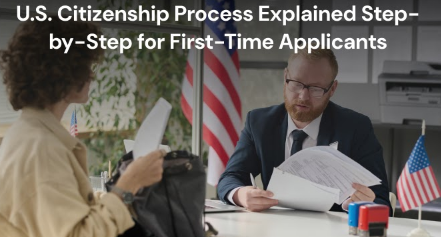
Every year I stand in the back of a naturalization ceremony and watch faces transform. Just hours earlier, those same people were nervous, clutching citizenship certificates they hadn’t yet earned, unsure if the officer believed them. Now they’re waving flags with their families, a journey completed.
I’ve guided thousands of clients through the U.S. citizenship process as an attorney, and here’s what I wish every first-time applicant understood: this isn’t a form you casually mail in. It’s a legal marathon where a single misstep can delay the finish line by a year or more.
If you’re asking “how can I get an American citizenship?” you’re really asking about a rigorous, multi-step process that tests your patience as much as your paperwork. Let me walk you through exactly how the American citizenship process works, where applicants tend to stumble, and why having experienced attorneys for immigration in your corner changes everything.
Step 1: Know That Not Everyone Is Eligible Right Away
Before we talk about the us citizenship application itself, we have to pause at U.S. Citizenship Requirements. This is where I see heartbreak happen — people spend weeks on paperwork only to learn they don’t qualify yet.
The basic U.S. Citizenship Requirements are: you must be at least 18 years old; you must have been a lawful permanent resident (green card holder) for at least five years, or three years if married to and living with a U.S. citizen spouse; you need continuous residence and physical presence in the United States; you must demonstrate good moral character; and you need a working knowledge of English and U.S. history and government. Those sound straightforward until real life gets in the way.
I once sat with a green card holder who had spent 29 months outside the U.S. caring for an ill parent. She assumed she could explain that to the officer. But continuous residence rules break when you’re outside the country for more than six months, and a trip over one year can shatter your eligibility entirely. She needed a reentry permit years earlier, and now she had to wait almost five years from her return to restart the process to obtain citizenship.
This is why I hammer home: check your travel history before you even download the N-400. How to become a citizen of the United States isn’t just about wanting it; it’s about meeting every single legal threshold the moment you sign.
Step 2: Prepare Form N-400 Like a Lawyer, Not a Scheduler
Once you’re certain you meet U.S. Citizenship Requirements, the actual us citizenship application begins with Form N-400. This is the cornerstone of the entire American citizenship process, and it runs 20 pages. But don’t let the length fool you into rushing.
I often get the question “how to apply for us citizenship,” and my answer is always the same: with excruciating attention to every question. The form asks about your entire history — every address, every employer, every trip outside the U.S. over the last five years, and every interaction with law enforcement, including traffic tickets that resulted in fines over $500. I’ve seen a client answer “no” to the citation question because he thought a speeding ticket didn’t count. The officer pulled his driving record, found three tickets, and suddenly, we were defending a moral character issue that could have been handled easily with upfront disclosure. A small oversight in a us citizenship application becomes a credibility problem, and credibility problems lead to denials.
The process of us citizenship isn’t about handing the government just enough information. It’s about giving them a complete, transparent picture so there are no surprises at the interview. When I prepare an N-400 for a client, we pull tax transcripts, driving records, and prior immigration filings to make sure every date matches. Inconsistency is the fastest route to a “continuance” that sits in a pile for months.
Step 3: Navigate Biometrics and the Waiting Game
After USCIS receives your us citizenship application, they send a biometrics appointment notice. This is the fingerprint and photograph stage, and it feels simple, but it trips people up when they try to reschedule. If you can’t make the appointment, call USCIS immediately — don’t ignore it. A missed biometrics appointment without notice is an abandoned application.
This is the chapter where USCIS processing times start controlling your life. I’ve been practicing long enough to remember when the whole American citizenship process took four to six months in some field offices. Now USCIS processing times can stretch to 14, 16, or even 18 months, depending on where you live. I had a client in Dallas wait 15 months for an interview while her sister in Cleveland got one in five months. There’s no shortcut. But you can track your case online and keep your address current so you never miss a notice. Knowing real-time USCIS processing times helps you plan, but patience remains the one requirement nobody talks about.
Step 4: Survive the Interview and Civics Test
If you’ve ever sweated through a job interview, multiply that by ten — but add an oath and an armed officer. The naturalization interview is the moment your N-400 stops being paperwork and becomes a living, breathing conversation under oath. The adjudicator sits across from you, flips through every page you filed, and starts asking questions. Some are casual (“Where do you work now?”), and some cut deep (“Were you ever a member of a political party you didn’t mention?”). They’re testing your English, sure, but they’re also testing your honesty.
I always remind my clients: the interview doesn’t start when you sit down. It starts the second you walk through the building’s door. Officers are trained to observe. They notice if your answers sound memorized or if you hesitate in ways that feel off. The 100 civics questions need to live in your bones, not just your brain, because anxiety can hijack recall.
But just as importantly, understand that the officer isn’t your adversary. They’re not hoping you fail. They have a duty to uphold the law, and they’re watching to see if you’re the person your application claims you are. If you update them about a new job, a recent trip, or anything that has changed since you filed, you reinforce that you’re transparent. And transparency is the currency of approval in the entire U.S. citizenship process.
Step 5: Receive a Decision — And Know What to Do If It’s Not a “Yes”
At the end of the interview, officers often say the case is “recommended for approval.” That’s good, but it’s not final until you get the written notice. Sometimes they issue a Request for Evidence or a continuance. I worked with a client who was told she needed to submit additional tax documents within 30 days. She sent them on day 32, thinking it was close enough. Her case was denied for abandonment, and we had to spend thousands in legal fees to reopen it. When USCIS gives you a deadline, they mean it. That’s a non-negotiable in the American citizenship process.
If you do receive a denial, it’s not necessarily the end. You can file a Form N-336 to request a hearing, and that’s precisely the moment when having attorneys for immigration who understand the nuances can change the outcome. Many green card application denial reasons overlap with citizenship denials — an old deportation order, a criminal disposition, a finding of fraud. Citizenship denial, however, can carry even higher stakes, so you don’t want to experiment alone.
Step 6: The Oath Ceremony — Where the Journey Ends
When you finally get that approval letter, you’ll be scheduled for an oath ceremony. I attend them whenever I can, because it’s the payoff for months or years of anxiety. You’ll return your green card, take the Oath of Allegiance, and receive your Certificate of Naturalization. At that moment, the question “how can I get an American citizenship?” transforms into a life you’re living.
But even here, be careful. Until you hold that certificate, you’re still a permanent resident. Don’t leave the country between the interview and oath without checking with USCIS. Don’t get arrested. Don’t do anything that could jeopardize moral character. I recall a client who celebrated a bit too hard the night before his oath and got charged with a DUI. We resolved it, but it nearly cost him everything.
Why the Right Support Matters at Every Stage
I meet people who ask “how to apply for us citizenship” as if I’m going to hand them a one-page form. When I explain the entire U.S. citizenship process — the eligibility minefields, the background checks, the USCIS processing times, the interview — you can see the realization hit. This is legal work, not a DIY project.
An immigration law firm doesn’t just fill in blanks; we spot the red flags before they become RFEs. When someone asks, “How can I get an American citizenship without losing my mind?” the honest answer is to surround yourself with people who do this every day.
Our immigration law firm was built for first-time applicants who can’t afford a mistake. We translate the process of citizenship into plain English, prepare you for the interview, and sit with you through the USCIS processing times until you take the oath. If you’ve been wondering how to become a citizen of the United States without navigating the maze alone, reach out to seasoned attorneys for immigration. The process is hard enough; your legal team shouldn’t be.
Frequently Asked Questions
1. What are the most important U.S. Citizenship Requirements?
You must be a lawful permanent resident for at least five years (or three if married to a U.S. citizen), demonstrate continuous residence and physical presence, prove good moral character, and pass English and civics exams. Some people qualify through military service, but the core U.S. Citizenship Requirements are non-negotiable. An immigration law firm can review your travel history and background to confirm you meet the requirements before you file.
2. How long does the us citizenship application process take?
USCIS processing times vary wildly by field office, but the entire American citizenship process now typically takes 12 to 18 months from filing to oath. Tracking USCIS processing times online and responding immediately to any requests can keep your case moving, but external delays remain possible. Early preparation with attorneys for immigration reduces the risk of your own mistakes extending that timeline.
3. How to apply for US citizenship if I have a criminal record?
You must disclose every arrest and conviction, even if it was expunged. Depending on the offense, it may affect your moral character or even render you deportable. Before you file a us citizenship application, consult an immigration law firm. Some crimes are permanent bars; others require careful legal argument. Guessing is the fastest way to a denial.
4. How can I get an American citizenship faster?
Unfortunately, there’s no premium processing for naturalization. The process of citizenship follows a fixed statutory framework. The best way to avoid unnecessary delays is to submit an error-free N-400, attend biometrics on time, and respond to all USCIS notices promptly. A good legal team helps you front-load evidence so the officer doesn’t issue a Request for Evidence, which can add months to USCIS processing times.
5. Why should I hire attorneys for immigration instead of doing it myself?
The U.S. citizenship process is full of traps — complicated travel patterns, prior immigration misrepresentations, income tax issues. Attorneys for immigration know what officers look for and can structure your case to address concerns before they arise. When you’re investing years of your life in the American citizenship process, the fee for a qualified immigration law firm is a fraction of what a single mistake could cost you.