
Strategies for Managing Debt and Navigating Legal Challenges
Understanding Personal Finance and Legal Challenges
Personal finance, for many, is a journey fraught with complexities, and for legal professionals, these challenges often come with unique twists. While lawyers are adept at navigating the intricacies of the law for their clients, their own financial well-being can sometimes take a backseat. Understanding these common pitfalls is the first step toward building a resilient financial future.

One significant hurdle is the sheer cost of legal education. Many lawyers graduate with substantial student loan debt, which can loom large over early career decisions and wealth-building efforts. In fact, a 2026 study revealed that over 54% of Millennials, a demographic that includes many early to mid-career lawyers, expressed concern about their ability to repay their student loan debt. This debt burden often delays major financial milestones like homeownership or aggressive retirement savings.
Beyond student loans, lawyers face other common financial challenges, some of which are exacerbated by their profession:
- Financial Literacy Gaps: Despite their high intellectual capacity, legal professionals are not immune to financial literacy gaps. Research indicates that only 24% of Millennials demonstrate basic financial knowledge, and this lack of foundational understanding can lead to suboptimal decisions in budgeting, saving, and investing.
- Lifestyle Creep: As income rises, so too can expenses. This phenomenon, known as lifestyle creep, is particularly prevalent among successful legal professionals. The demands of the profession, coupled with societal expectations, can lead to increased spending on housing, cars, and social activities, making it difficult to save or invest aggressively.
- Income Volatility: While many lawyers enjoy high earning potential, income can be volatile, especially for solo practitioners or those in contingency-fee practices. This unpredictability makes budgeting and long-term planning more challenging.
- Malpractice Liability: Lawyers operate in a high-stakes environment, and the risk of malpractice lawsuits is a constant concern. Such liabilities can pose a significant threat to personal assets if not adequately protected through insurance and proper business structuring. This is a distinct area from personal legal matters such as those related to family law and criminal defense, which require their own specialized legal counsel.
- Career Transitions: Moving between firms, starting a solo practice, or even transitioning out of law can create financial disruptions. These periods require careful planning to manage income gaps, benefit changes, and potential relocation costs.
- Law Firm Benefits: While many law firms offer robust benefits packages, including 401(k) matches, health savings accounts (HSAs), and other perks, lawyers often fail to fully understand or maximize these offerings. These benefits are critical components of a comprehensive financial plan and can significantly boost long-term wealth.
These challenges highlight the need for a proactive and informed approach to personal finance. It’s not enough to earn a high income; effective management, protection, and strategic growth of that income are paramount.
Urgent Self-Defense: How to Respond to a Debt Summons
One of the most immediate and impactful legal challenges a person can face is a debt collection lawsuit. Receiving a summons for debt can be a frightening experience, but ignoring it is the worst possible response. Understanding how to react swiftly and strategically is crucial to protecting your financial health.
When you receive a debt summons, a strict court deadline begins. Missing this deadline almost invariably leads to a default judgment against you. A default judgment means the court rules in favor of the debt collector without hearing your side, granting them the legal right to pursue aggressive collection actions like wage garnishment, bank levies, or asset seizure. For example, nearly 50% of Millennials don’t believe they could come up with $2,000 for an unexpected need, making them particularly vulnerable to such actions.
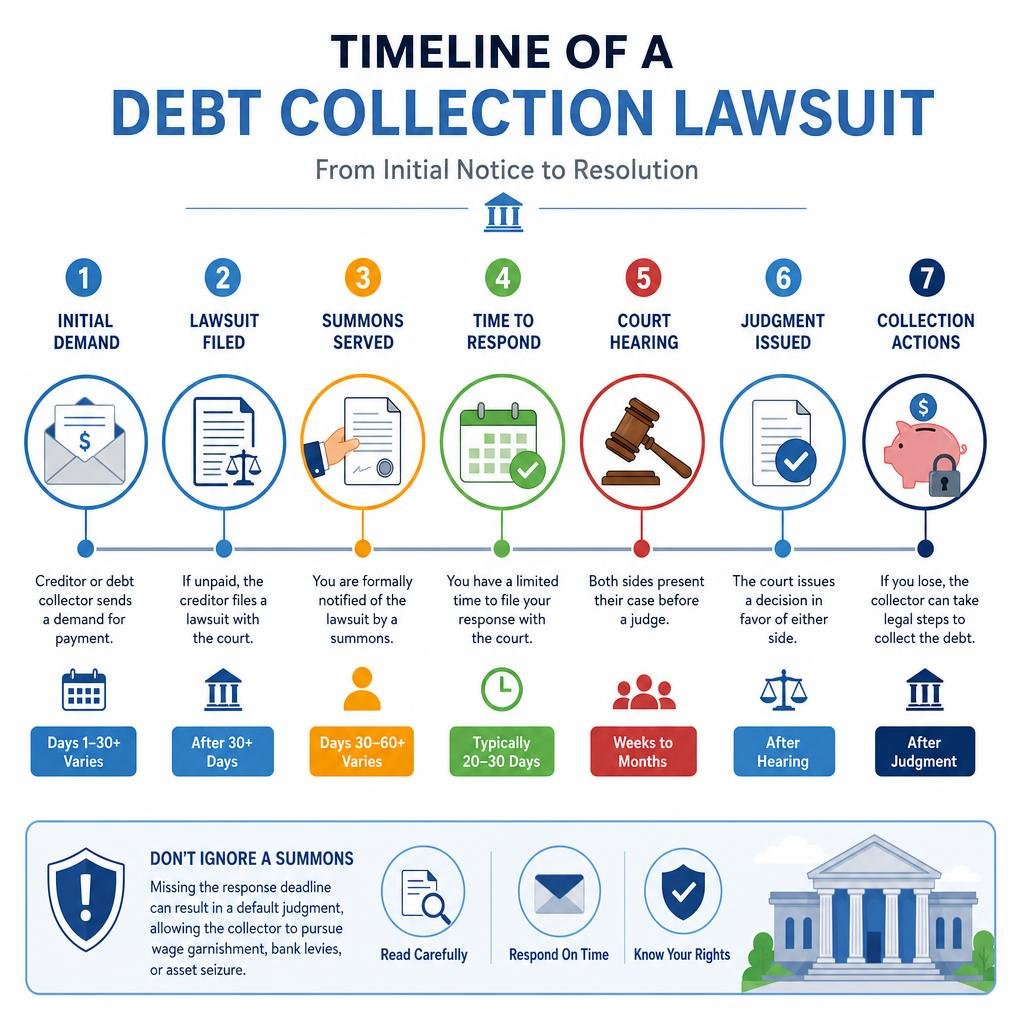
Here’s what you need to do:
- Do Not Ignore It: The clock is ticking. Most states allow only 20-30 days to respond.
- Understand the Claim: Read the summons carefully. Who is suing you? For how much? What is the alleged debt?
- Verify the Debt: You have a right to debt validation. Send a certified letter to the debt collector requesting proof that you owe the debt, that they own it, and that the amount is accurate. This is a critical step under the Fair Debt Collection Practices Act (FDCPA), which protects consumers from abusive debt collection practices.
- Prepare Your Answer: This is your formal response to the court. You can admit, deny, or state that you lack sufficient information for each allegation. You can also raise affirmative defenses, such as the statute of limitations, identity theft, or that the debt has already been paid.
- Consider Arbitration: Many credit card agreements include an arbitration clause, which allows you to move the dispute out of public court and into private arbitration. This can sometimes be a strategic move, as arbitration can be less formal and expensive than court.
For those who cannot afford an attorney, or prefer a more hands-on approach, a DIY legal defense system can provide the tools and guidance needed to draft an effective response. These platforms often offer step-by-step instructions, templates, and even AI-powered assistance to help you understand your options and prepare court-ready documents.
Here’s a comparison of common court answer options and arbitration:
Feature Filing an Answer in Court Motion to Compel Arbitration Goal Defend against the lawsuit in public court. Move the dispute out of court into private arbitration. Process File a written response, attend hearings, potential trial. File a motion with the court, citing arbitration clause. Cost Court fees, potential attorney fees. Filing fees for arbitration, potentially lower overall. Complexity Can be complex, requires knowledge of civil procedure. Requires knowledge of contract law and motion practice. Outcome Dismissal, settlement, judgment for either party. Arbitration award (binding decision). Public Record Yes, court proceedings are public. No, arbitration is private. Creditor Response May lead to settlement offers or continued litigation. Often leads to debt collector dropping the case or settling. Best For Cases where you have strong defenses, or prefer public forum. Credit card debts with arbitration clauses, seeking privacy. Ignoring a summons can lead to severe financial consequences, including frozen bank accounts or deductions from your paycheck. Taking immediate, informed action is your best defense.
Proactive Asset Protection and Wealth Building Strategies
While reacting to legal challenges is essential, proactively building and protecting your wealth is the cornerstone of long-term financial security. This involves a combination of smart financial planning and strategic legal structuring.

1. Maximize Tax-Advantaged Accounts: The foundation of wealth building often lies in utilizing tax-advantaged accounts. For legal professionals, this means maximizing contributions to 401(k)s, 403(b)s, and Individual Retirement Accounts (IRAs). For solo practitioners, options like Solo 401(k)s or SEP IRAs offer significant contribution limits. Health Savings Accounts (HSAs) are also powerful tools, offering a triple tax advantage: tax-deductible contributions, tax-free growth, and tax-free withdrawals for qualified medical expenses.
2. Strategic Asset Protection: Asset protection is about legally shielding your wealth from potential creditors, lawsuits, and other liabilities. This is particularly important for high-net-worth individuals and professionals in high-risk occupations.
- Irrevocable Trusts: These trusts transfer assets out of your name into the trust, making them generally inaccessible to creditors. However, they are “irrevocable,” meaning you give up control over the assets.
- Limited Liability Companies (LLCs): For business owners and real estate investors, an LLC can protect personal assets from business liabilities. It’s crucial to maintain strict separation between personal and business finances to prevent courts from “piercing the corporate veil.”
- Homestead Exemptions: Many states offer homestead exemptions, protecting a portion or even all of your primary residence’s equity from creditors. For instance, states like Florida and Texas offer unlimited homestead protection, while others have specific caps.
- ERISA-Qualified Retirement Plans: Employer-sponsored retirement plans like 401(k)s and pensions, governed by ERISA (Employee Retirement Income Security Act), offer robust federal protection from civil creditors. Rolling traditional IRAs into an ERISA-qualified plan can significantly enhance their protection.
- Umbrella Insurance: This type of insurance provides an extra layer of liability coverage beyond your home and auto policies, protecting you from large judgments that could otherwise wipe out your assets. A $1 million umbrella policy typically costs between $150 and $300 per year, offering substantial peace of mind.
- Timing is Key: Asset protection strategies must be implemented before a legal threat arises. Transfers made after a lawsuit is threatened or filed can be deemed “fraudulent conveyances” under laws like the Uniform Voidable Transactions Act, which typically has a four-year look-back period.
3. Navigating Life’s Transitions: Major life events often have significant financial and legal implications.
- Divorce and Asset Division: For those undergoing a “gray divorce” (divorcing at age 55 or older), understanding the tax implications of retirement asset division is crucial. A Roth IRA dollar, being after-tax, is worth significantly more than a traditional 401(k) dollar, which is subject to future taxes. A nominal 50/50 split can result in vastly unequal after-tax wealth. Qualified Domestic Relations Orders (QDROs) are legal documents used to divide retirement plans without immediate tax penalties.
- Joint Accounts and POAs: Helping elderly parents manage their finances is a common act of kindness, but adding your name to a joint bank account can expose your assets to their debts, and vice-versa. A financial Power of Attorney (POA) is a safer alternative, allowing you to manage their finances without merging your risk profiles.
- Beneficiary Designations: This is a critical,, aspect of estate planning. Beneficiary designations on retirement accounts and life insurance policies legally trump instructions in a will or divorce decree. A failure to update these after major life events (like divorce) can lead to unintended consequences, as the U.S. Supreme Court has affirmed that plan administrators must follow the form on file.
- Avoiding Predatory Lending: In times of financial strain, it’s tempting to turn to quick solutions like short-term auto title loans. However, these often come with extremely high interest rates and fees, trapping borrowers in a cycle of debt. Understanding the true cost and seeking more sustainable financial solutions is vital.
Building wealth is a marathon, not a sprint. It requires consistent effort, informed decisions, and a proactive approach to both financial growth and legal protection.
Frequently Asked Questions
How do lawyers manage their own personal finance and legal challenges?
Lawyers face unique financial challenges, often stemming from high student loan debt and the demands of their profession. To manage these, many employ strategies such as:
- Aggressive Student Loan Repayment: Utilizing income-driven repayment plans, public service loan forgiveness (PSLF) where applicable, or refinancing at lower rates.
- Early Retirement Planning: Despite debt, many prioritize contributing to 401(k)s, especially if there’s an employer match, and exploring options like Solo 401(k)s for solo practitioners. However, lawyers often face unique psychological hurdles with retirement, sometimes struggling with the idea of losing their professional identity.
- Combating Lifestyle Creep: Actively budgeting and making conscious spending choices to prevent increased income from being entirely absorbed by discretionary expenses. This is a significant challenge for law firm owners whose income often rises sharply.
- Strategic Tax Planning: Engaging with financial advisors and CPAs to minimize tax liabilities, especially for freelance lawyers or those with complex income streams. Avoiding common tax and investment mistakes, like making emotional decisions during market downturns, is also key.
What are the most common personal finance and legal challenges for everyday consumers?
Everyday consumers frequently encounter challenges such as:
- Debt Collection: Dealing with aggressive debt collectors, receiving collection calls, and facing debt collection lawsuits. Nearly 53% of Millennials carried over a credit card balance in the last 12 months, indicating widespread credit card debt.
- Summons and Default Judgments: Ignoring legal notices for debt and unknowingly incurring default judgments, which then open the door to wage garnishment and bank levies.
- Credit Utilization and Scores: Struggling to improve credit scores due to high credit utilization ratios or past financial difficulties.
- Emergency Savings: A significant portion of the population lacks sufficient emergency savings. Nearly 50% of Millennials, for instance, don’t believe they could come up with $2,000 for an unexpected need, leaving them vulnerable to financial shocks.
- Financial Literacy: A general lack of basic financial knowledge, leading to poor budgeting, saving, and investment decisions.
How can I protect my assets from a civil lawsuit?
Protecting your assets requires proactive planning and a multi-layered approach:
- Umbrella Insurance: Obtain a high-limit umbrella insurance policy (e.g., $1 million or more) to provide additional liability coverage beyond your auto and homeowner’s insurance.
- Homestead Exemption: Understand and utilize your state’s homestead exemption laws, which protect a portion of your primary residence’s equity from creditors. The level of protection varies significantly by state.
- ERISA Protection: Maximize contributions to ERISA-qualified retirement plans (like 401(k)s), as these generally offer robust federal protection from civil creditors.
- Irrevocable Trusts and LLCs: For significant assets or business ventures, consider establishing irrevocable trusts or Limited Liability Companies (LLCs) to separate assets from personal liability. These must be set up before any legal threat arises.
- Look-Back Period: Be aware that most states have a “look-back period” (typically four years) under which courts can reverse asset transfers made to avoid creditors. Proactive planning well in advance of any potential claim is essential.
Conclusion
Navigating the intersection of personal finance and legal challenges can seem daunting, but it doesn’t have to be. By understanding the common pitfalls, proactively planning for wealth building and asset protection, and knowing how to respond effectively to legal threats, you can take control of your financial destiny.
Financial empowerment comes from knowledge and action. Whether it’s meticulously managing student loan debt, strategically planning for retirement, or knowing your rights when faced with a debt collection lawsuit, each step contributes to a more secure future. Seeking out reliable resources and, when necessary, professional guidance, is a sign of strength, not weakness. With proactive planning and the right legal resources at your disposal, you can build a resilient financial foundation that withstands life’s unexpected challenges.