
Arbitration: A Practical Guide to Resolving Disputes Outside the Courtroom
Table of Contents
- What Is Arbitration?
- Types of Arbitration
- The Arbitration Process
- Advantages of Arbitration
- Limitations and Considerations
- Arbitration in Different Sectors
- Conclusion
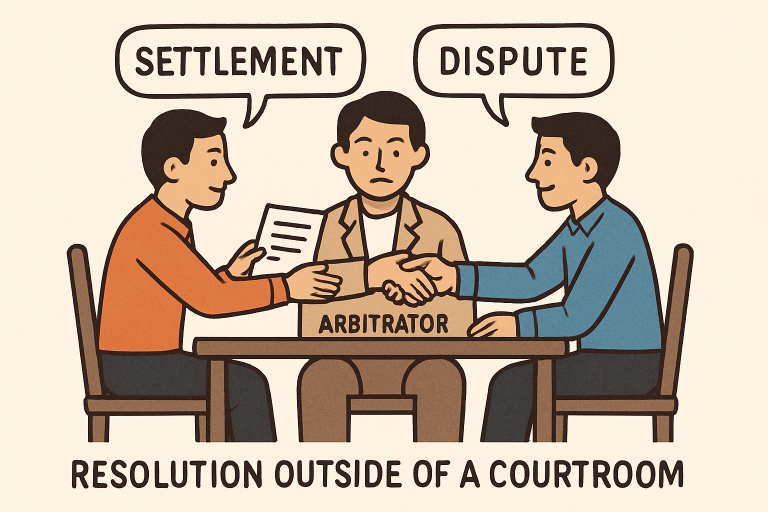
When conflicts arise, many people and businesses look to the courts for a solution. While litigation is a common route, arbitration presents a meaningful alternative that can save time and reduce stress. By choosing arbitration, parties hand their dispute to a neutral third party who delivers a resolution outside of a traditional courtroom setting. Options such as non-binding arbitration offer increased flexibility for those seeking alternative methods of problem-solving.
Arbitration is favored for its unique features such as privacy, efficiency, and adaptability to the parties’ needs, making it a viable dispute resolution option. This guide outlines the essential aspects of arbitration, including its processes, benefits and drawbacks, and its applications across various industries. Being informed about arbitration is vital for individuals and organizations seeking effective dispute resolution strategies. The article also highlights recent trends and legal developments in arbitration practices, providing insights for those considering alternatives to traditional courtroom proceedings.
What Is Arbitration?
Arbitration is a structured process in which disputing parties agree to submit their conflict to an impartial arbitrator or panel, who then delivers a decision. Unlike courtroom litigation, arbitration is typically confidential, providing privacy to both parties. The process has become popular for its reputation of being less combative and more adaptable to the needs of those in dispute.
Arbitration is voluntary in that both parties must agree to use this method, typically through an arbitration clause in a contract signed before any conflict arises. This agreement preempts the need for court involvement and moves the disagreement to an arbitration forum, often managed by experienced professionals in the relevant field.
Types of Arbitration
Arbitration comes in two main forms:
- Binding Arbitration: In this format, the arbitrator’s decision is final and enforceable by courts. Parties waive their rights to appeal, meaning the outcome stands unless there’s evidence of fraud or undue influence.
- Non-Binding Arbitration: Here, the arbitrator offers a recommendation that the parties can accept or reject. Non-binding arbitration is often used as a stepping stone to further negotiation or, in some cases, litigation if an agreement is not reached.
Choosing between binding and non-binding arbitration depends largely on the risk, value, and relational interests at stake. Some contracts will specifically call out which type must be used, with non-binding arbitration favored for lower-impact disputes where flexibility remains important.
The Arbitration Process
Arbitration unfolds through several clearly defined stages:
- Agreement to Arbitrate: The parties sign a contract or agreement to arbitrate, which sets the terms for resolving disputes.
- Selection of Arbitrator(s): Once a dispute arises, the parties jointly choose a neutral decision-maker or a panel with relevant expertise.
- Pre-Hearing Procedures: Similar to court discovery, but usually more focused and flexible, this stage allows parties to share critical documents and witness lists.
- Hearing: Arguments and evidence are presented to the arbitrator in a less formal setting than a traditional court. Participants may include attorneys, key witnesses, and subject matter experts.
- Award: After reviewing the evidence, the arbitrator delivers a written decision. In binding arbitration, the award is enforceable in court; in non-binding arbitration, it is advisory unless both parties accept it.
Advantages of Arbitration
Arbitration appeals to many people and organizations for several reasons:
- Speed: Disputes resolved through arbitration usually take less time than court cases.
- Cost-Effectiveness: Lower legal and administrative fees are possible, especially due to limited discovery and expedited hearings.
- Confidentiality: Arbitration is generally private, keeping business secrets and sensitive information from public exposure.
- Expertise: Parties can select arbitrators with specific knowledge of the relevant industry or area of law, leading to more informed decisions.
In addition, streamlined procedures allow parties to resolve disagreements and move forward with less interruption to ongoing business or personal relationships.
Limitations and Considerations
Despite its strengths, arbitration presents some challenges:
- Limited Appeal Rights: Once an arbitrator issues a binding decision, overturning it is difficult, generally limited to rare circumstances such as misconduct or blatant error.
- Costs: While usually less than a full court trial, arbitration fees can rise, particularly when multiple arbitrators are involved or complex evidence is required.
- Enforceability: Arbitration awards require cooperation between parties or government support for enforcement, which may become problematic in international cases or with resistant parties.
It is important for parties to weigh the pros and cons and seek legal counsel to carefully craft arbitration agreements that protect their interests.
Arbitration in Different Sectors
Arbitration is neither limited to one type of dispute nor exclusively used by corporations. It plays a critical role in several sectors:
- Commercial Disputes: Companies often include arbitration clauses in business contracts to provide a predictable mechanism for resolving disputes.
- Employment Disputes: Employees and employers may choose arbitration to address wrongful termination, wage disagreements, or discrimination claims.
- Consumer Disputes: Service providers sometimes include arbitration clauses in consumer contracts to manage complaints, but this practice is controversial and raises fairness concerns.
Each sector has unique concerns and regulatory frameworks governing when and how arbitration may be used, requiring parties to understand how those apply in their particular context.
Conclusion
Arbitration stands out as an essential tool for navigating disputes outside the courtroom. By understanding its procedures, advantages, and limitations, individuals and organizations can better assess where arbitration fits into their strategic approach to conflict resolution. Informed choices in arbitration not only save time and resources but also support healthier working, business, and personal relationships in the long run.